

| OP092 | Transfer | Surface Access | 2026 |
| OP088 | Period Music | Period Music | 2026 |
| OP094 | Music for Tombak & Synth | Cinna Peyghamy, Quelque Bourdon | 2026 |
| OP083 | In Rupture | Enxin/Onyx | 2025 |
| OP081 | Advanced Surface Habitat | Surface Access | 2025 |
| OP090 | Desaparición Incompleta | aylu | 2025 |
| OP086 | Wind, Again | Sary Moussa | 2025 |
| OP089 | Fronte Violeta | Carla Boregas, Anelena Toku | 2025 |
| OP085 | Convergence | Earth Sounds Now | 2025 |
| OP090 | Fobia | aylu | 2025 |
| OP093 | A Body Like a Home | Alejandra Cárdenas | 2025 |
| OP076 | Vibrante | Valentina Villarroel | 2024 |
| OP060 | Archivos de Radio Piedras | Nicolás Jaar | 2024 |
| OP079 | Middle of Nowhere | Büşra Kayıkçı, Nicolás Jaar | 2024 |
| OP070 | Melancholy Sabotage | Solpara | 2024 |
| OP077 | Versus | Patrick Higgins | 2024 |
| OP084 | Narraciones de un Retorno | Eli Wewentxu | 2024 |
| OP082 | Piedras 2 | Nicolás Jaar | 2024 |
| OP078 | Piedras 1 | Nicolás Jaar | 2024 |
| OP080 | Offering | Okokon | 2024 |
| OP071 | Portals | Neyva, VORA, brz, mrsebs, Umbra Abra, Becca Lilia, Romeo Diablos, Nicolás Jaar | 2023 |
| OP072 | Rhizomes | Aho Ssan, Nyokabi Kariũki, Blackhaine, Nicolás Jaar, Resina, clipping., 9T Antiope, James Ginzburg, Exzald S, Valentina Magaletti, Angel Bat Dawid, Moor Mother, Mondkopf | 2023 |
| OP074 | Weavings II | Valentina Magaletti, Nicolás Jaar, Oren Ambarchi, Tomoko Sauvage, Khyam Allami, Antonina Nowacka, Paweł Szamburski, Angel Bat Dawid, Raphael Roginski, Resina, Aho Ssan, Pak Yan Lau | 2023 |
| OP073 | Intiha | Nicolás Jaar, Ali Sethi | 2023 |
| OP065 | Weavings | Aho Ssan, Angel Bat Dawid, Dirar Kalash, Ellen Fullman, Księżyc, Laraaji, Nicolás Jaar, Paweł Szamburski, Resina, Rolando Hernández Guzmán, Wukir Suryadi, Ka Baird, Rully Shabara, Juliana Huxtable | 2022 |
| OP059 | Would It Sound Just As Bad If You Played It Backwards? A Collection of Sounds from the Studio Eksperymentalne Polskiego Radia (1959-2001) Vol. II | Włodzimierz Kotoński, Bohdan Mazurek, Elzbieta Sikora, Bernadetta Matuszczak, Magdalena Dàugosz, Barbara Zawadzka, Krzysztof Knittel | 2022 |
| OP056 | Would It Sound Just As Bad If You Played It Backwards? A Collection of Sounds from the Studio Eksperymentalne Polskiego Radia (1959-2001) Vol. I | Krzysztof Knittel, Bohdan Mazurek, Magdalena Dàugosz, Barbara Zawadzka, Eugeniusz Rudnik, Bogusław Schaeffer | 2022 |
| OP067 | Addio | Dienne | 2022 |
| OP068 | Patience of a Traitor | Saint Abdullah, Eomac | 2022 |
| OP069 | A Common Misunderstanding of the Speed of Light | Charbel Haber | 2022 |
| OP064 | Yakjehti Mein | Nicolás Jaar, Ali Sethi | 2021 |
| OP063 | Caves - A Compilation Of Silences | Will Epstein, Nicolás Jaar, Sary Moussa, Lucrecia Dalt, Marzio Zorio, Aho Ssan, Ana Quiroga, Laraaji | 2021 |
| OP062 | Ema (Original Motion Picture Soundtrack) | Nicolás Jaar, E$tado Unido | 2021 |
| OP057 | Illusions Of Shameless Abundance | Against All Logic, Lydia Lunch, FKA Twigs, E$tado Unido | 2020 |
| OP053 | 2017 - 2019 | Against All Logic, Lydia Lunch | 2020 |
| OP052 | Imbalance | Sary Moussa | 2020 |
| OP055 | Cenizas | Nicolás Jaar | 2020 |
| OP054 | Telas | Nicolás Jaar | 2020 |
| OP061 | Psychic Live July 17 2014 | Darkside | 2020 |
| OP050 | Steals | Vtgnike | 2019 |
| OP051 | Bandiera Di Carta | Tomaga, Pierre Bastien | 2019 |
| OP048 | 2012-2017 | Against All Logic | 2018 |
| OP049 | Dossier | Patrick Higgins | 2018 |
| OP047 | Nymphs | Nicolás Jaar | 2018 |
| OP034 | Jream House | A Pleasure | 2016 |
| OP036 | Trembling Air | 12z | 2016 |
| OP038 | Become Alive | Dave Harrington Group | 2016 |
| OP037 | Atelier Limbs | Mencius Leonard | 2016 |
| OP041 | The Full Stream Ahead: The Prologue | Vaghe Stelle | 2016 |
| OP043 | Crush | High Water | 2016 |
| OP046 | The Pugilist / Feign Virile | Mencius Leonard | 2016 |
| OP042 | Sirens | Nicolás Jaar | 2016 |
| OP044 | Goshen | ot to not to | 2016 |
| OP015 | Swing | Solpara | 2015 |
| OP019 | Goodbye | Goodbye | 2015 |
| OP024 | GHETTO | DJ Slugo | 2015 |
| OP026 | The Free Fall Inspirations | 12z | 2015 |
| OP027 | Conspiracy of Women | Lydia Lunch, Nicolás Jaar, Weasel Walter | 2015 |
| OP021 | Disquiet | John Bence | 2015 |
| OP022 | Nymphs II | Nicolás Jaar | 2015 |
| OP032 | Nymphs III | Nicolás Jaar | 2015 |
| OP031 | Pomegranates | Nicolás Jaar | 2015 |
| OP033 | Abstract Speed + Sound | Vaghe Stelle | 2015 |
| OP028 | Terepa | Terepa | 2015 |
| OP025 | Mrs Jones EP | Mrs Jones | 2015 |
| OP030 | Obratno | Inlensk | 2015 |
| OP029 | Turkson Side | Okokon | 2015 |
| OP045 | Nymphs I | Nicolás Jaar | 2015 |
| OP035 | Live 1977-1979 | Teenage Jesus and the Jerks | 2015 |
| OP004 | Dubna | Vtgnike | 2014 |
| OP009 | Over Under | Drew Gragg | 2014 |
| OP012 | Don't Tell Me | Just Friends | 2014 |
| OP010 | Ashes to Ash | Ashlee | 2014 |
| OP011 | Ancient Astronaut | Ancient Astronaut | 2014 |
| OP007 | Before This There Was One Heart But A Thousand Thoughts | Dave Harrington | 2014 |
| OP013 | King of Ghetto House | DJ Slugo | 2014 |
| OP008 | Paragraphs | Ezekiel Honig | 2014 |
| OP006 | Sigh | Valentin Stip | 2014 |
| OP016 | Sigh remixes | Valentin Stip | 2014 |
| OP023 | IVA | IVA | 2014 |
| OP017 | Work | Nicolás Jaar, Soul Keita, Dave Harrington, Tamara, Visuals, Darkside, Ancient Astronaut, Powell, Jelinek, Francis Harris, Gabriel Hedrick | 2014 |
| OP018 | Sigh (Interpretation) | Valentin Stip | 2014 |
| OP014 | Lucrecia Dalt | Lucrecia Dalt | 2014 |
| OP020 | You Are The One | Against All Logic | 2014 |
| OP001 | Trust | Will Epstein, Nikita Quasim, My Girl & Me, Quentin Pistol, David Terranova, High Water, Benjha, Acid Pauli, Triangleline, Valentin Stip, Nicolás Jaar | 2013 |
| OP002 | The Beautiful Moon | High Water | 2013 |
| OP005 | Visuals EP | Visuals | 2013 |
| OP066 | Space Is Only Noise | Nicolás Jaar | 2011 |
| OP000 | Network Mix | Nicolás Jaar |
Mar 2026 OP088 | Period MusicPeriod Music |
| ||||||||||||||||||||||||||||||||||||||||||||||||||||||||||||||||||||||||||||||||||||||||||||||||||||||||||||||||||||||||||||||||||||||||||||||||||||||||||||||||||
Jan 2026 OP092 | TransferSurface Access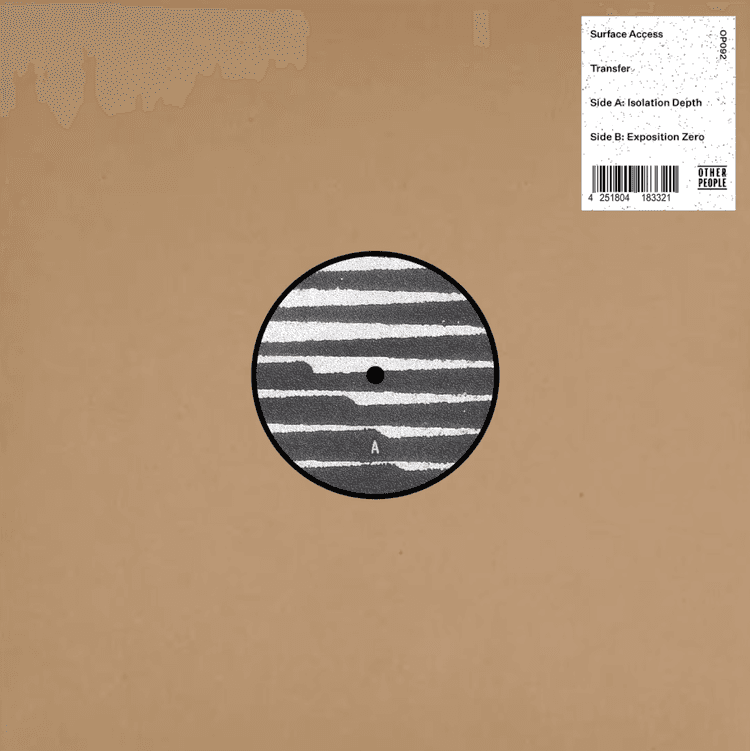 | Another fine slab of dub techno from French duo Surface Access
| ||||||||||||||||||||||||||||||||||||||||||||||||||||||||||||||||||||||||||||||||||||||||||||||||||||||||||||||||||||||||||||||||||||||||||||||||||||||||||||||||||
Nov 2025 OP093 | A Body Like a HomeAlejandra Cárdenas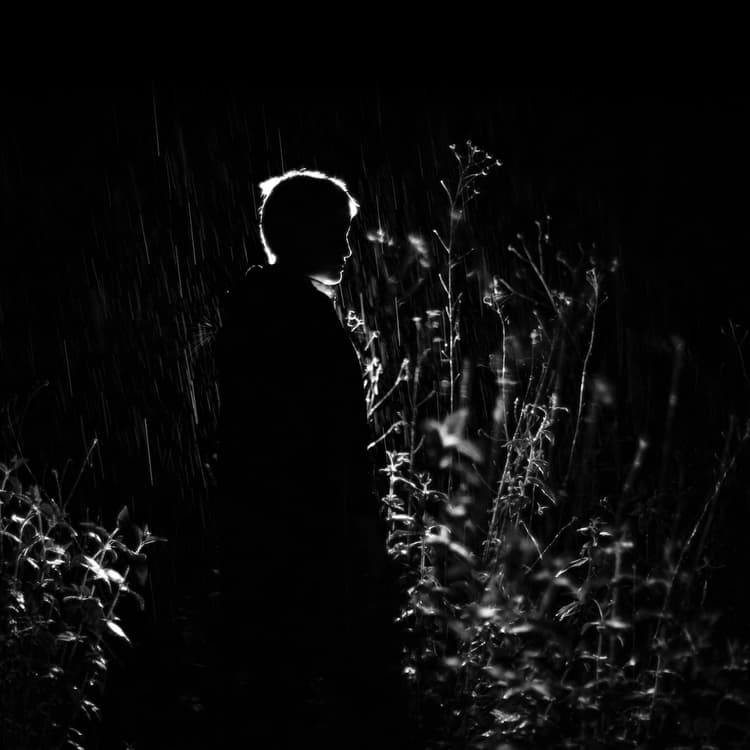 | Following a string of acclaimed collaborations, including Agua Dulce with percussionist Laura Robles and Mapambazuko alongside Congolese guitarist Titi Bakorta, Peruvian artist Alejandra Cárdenas (aka Ale Hop) returns with her most personal work to date yet, A Body Like a Home. Marking her first album under her birth name, the project is a sonic memoir exploring the tangled realms of trauma, recovery, and love through autobiographical soundscapes. A Body Like a Home is the artist at her most exposed. Comprising 13 songs and 15 poems, the album sees her set aside collaborative fusions for solo catharsis, channeling years of turbulence - intergenerational scars left by colonialism, racism, domestic violence, and alcoholism - into a work that oscillates between brutality and tenderness. Cárdenas states: “I grew up under Alberto Fujimori’s dictatorship, when a veil of hopelessness seemed to settle over everything. This is the backdrop of the album. The songs and poems trace the inevitable loop between private wounds - addiction, domestic violence, fractured intimacy - and Peru’s national scars, carved by colonialism. It’s not a straight story or a resolution. Writing and composing became a ritual of digging for meaning, into what’s buried, disguised, or renamed, until the body itself became a living archive.” At the heart of the album is Cárdenas’s own voice - part witness, part confessor - reciting over layers of electric guitars, electronic textures, the haunting violin of Mexican musician Gibrana Cervantes, and a collage of field recordings, from rainfall, muffled whispers, broken glass, to archival protest footage from Peru. The result is a work that resonates like a diary written in sound. The first single, "Motherland", is a searing testimony where Cárdenas voice cracks under the weight of history and personal loss. Amid a storm of distorted guitars, she traces the cyclical legacies of colonialism, from state massacres branding Indigenous bodies as “terrorists” to the spiral of addiction as an unavoidable future. The lyrics draw parallels between political and domestic violence: a mother’s drunken knife pressed to her chest, and a motherland where racism is currency. She utters: “sacrifice demands a body.” Yet, amid the wreckage, a willful grip on love and faith persists. Ultimately, A Body Like a Home is a document of transformation. Tracks like "Evangelina" and the title piece "A Body Like a Home" hold space for resilience, spirituality, and love, while "Early Road" and "Going South" thread subtle nods to Peruvian folklore, opening up bright vignettes into a sense of belonging. The poetry chapbook accompanying A Body Like a Home (five of its pieces are also recited on the album) extends the work, building a parallel architecture. Oscillating between the documentary and the mythic, the intimate and the forensic, the profane and the oniric, these poems practice a theology of the ordinary, where everyday objects - cameras, knives, moth-eaten cotton - are charged with spiritual and historical weight. Here, the body is land, house, battlefield, collective pain, geological territory; and trauma is, in contrast, archival, cellular, ritualistic, inherited. Read alongside the music, the stories refract across two mediums: songs give them breath and poems give them bone.
| ||||||||||||||||||||||||||||||||||||||||||||||||||||||||||||||||||||||||||||||||||||||||||||||||||||||||||||||||||||||||||||||||||||||||||||||||||||||||||||||||||
Oct 2025 OP090 | Fobiaaylu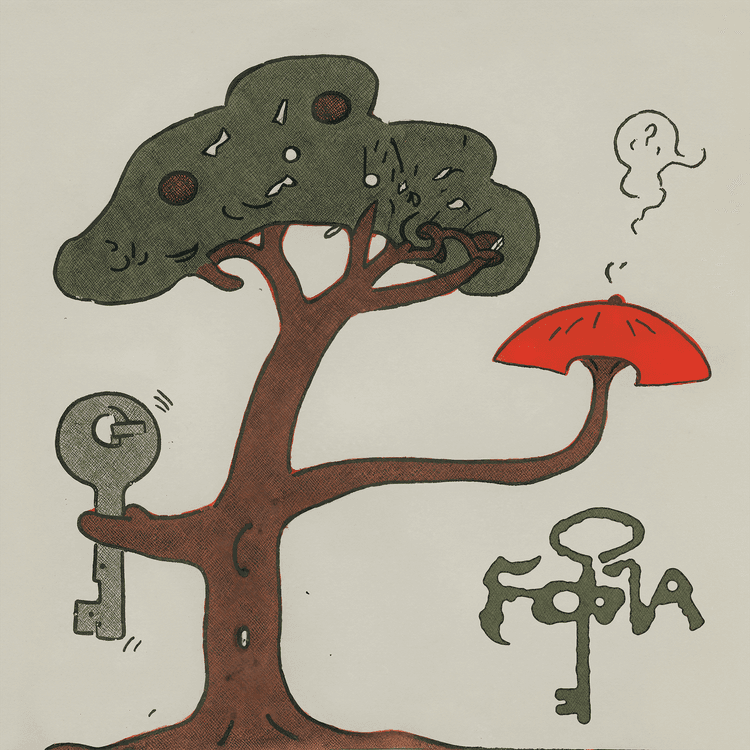 | Following up a string of releases on labels such as Mana, Sun Ark, Orange Milk Records and Abyss, Other People are honoured to present the new album Fobia by Argentinian musician and sound artist aylu, real name Ailin Grad. Inspired in part of Grad's many collaborative projects over the last few years, Fobia sees her collecting and rearranging the music and sounds fostered within these to create an intimate, spiritually charged album that turns personal struggle into collective resistance and resilience. What initially started as a way for Grad to process her own experiences with agora- and claustrophobia, and an attempt to navigate feelings of shame and a perceived demand to keep these feelings bottled up and hidden from the world, she began to realise how mental health struggles are not isolated incidents but part of broader systems of collective suffering and injustice. “It took a long time for me to discover that my issues were part of a system that produces these kinds of symptoms and that it takes a lot of courage to find a way around them. I have the feeling that more and more people suffer from these kind of things in some way or another, and what was at first taught as something you should be silent about and keep private, I discovered that the more you talk about it and share it with people you trust, the more you realise that it’s part of something much bigger.” This tension and constant pull between fear and joy, light and dark, is present throughout the album. From the strained breathing featured in opening track Yodo echoing the suffocating feeling from claustrophobia interspersed with the lighter textures of Obelisco Elysium and Prospero offering up a sense of relief, to the almost cacophonous, immersive sounds of El Sol Mal, mirroring the complex, often contradictory emotions when navigating mental health challenges. Fobia invites listeners to move through pain with honesty, finding strength in shared experiences.
| ||||||||||||||||||||||||||||||||||||||||||||||||||||||||||||||||||||||||||||||||||||||||||||||||||||||||||||||||||||||||||||||||||||||||||||||||||||||||||||||||||
Jul 2025 OP085 | ConvergenceEarth Sounds Now | Earth Sounds Now is a collective made up of community activist and musician Stefan Christoff, drummer, composer, scholar, and bandleader Asher Gamedze, music producer Nicolás Jaar, pianist and composer Büşra Kayıkçı, and novelist, poet, and sound performer Kaie Kellough. Over 13 months, they met online to share sounds, readings, writings, and drawings, resulting in Convergence—a project reflecting their collaborative process. Each member submitted different works, including paintings, poetry, field recordings, and musical experiments, taking turns responding to each other's contributions. Member Stefan Christoff highlights the importance of listening in these sessions: "Sometimes we would listen all together, so there was also silence on the online call as we all listened on headphones to the sounds from our respective places. I am underlining listening here, which the world needs much more of." These submissions were organized into a sound library and finally mixed into record format by Jaar, capturing the essence of their exchanges across global soundscapes.
| ||||||||||||||||||||||||||||||||||||||||||||||||||||||||||||||||||||||||||||||||||||||||||||||||||||||||||||||||||||||||||||||||||||||||||||||||||||||||||||||||||
Jul 2025 OP089 | Fronte VioletaCarla Boregas, Anelena Toku | Highlighting a decade of working together as ‘Fronte Violeta’, Brazilian transdisciplinary artist Anelena Toku and musician and sound artist Carla Boregas are set to release the album ‘Fronte Violeta’, a captivating blend of aural compositions, scents and experiences. Switching the moniker name to the album title serves as a way to showcase the culmination of their multidisciplinary project’s journey, developed from compiling fragments, sounds and intentions from their previous body of work comprising electroacoustic and electronic music composition, moving image, scent, installation and live performances. ‘Fronte Violeta’ is a sonic amalgam where synthesized sounds, percussion, voice, feathers, branches and other non-human sonorities coalesce. Toku and Boregas have skillfully woven together those elements creating a rich tapestry of interconnected sounds that tension our perception as something always in motion, never fully settling into an established form. The limited edition of the release features a specially crafted incense, composed to intertwine with the listening experience. This relationship between sound and scent is something that’s been present in their work, both can evoke different stimuli on their own as well as in tandem. Made from plants - cinnamon, rosemary, fir and breu resins - the scent is a resonance of remembrance, an invitation for a multisensory unveiling.
| ||||||||||||||||||||||||||||||||||||||||||||||||||||||||||||||||||||||||||||||||||||||||||||||||||||||||||||||||||||||||||||||||||||||||||||||||||||||||||||||||||
Jun 2025 OP086 | Wind, AgainSary Moussa | "Wind, Again" is Sary Moussa’s fourth studio album and second album on Other People. Based between France and Lebanon, Moussa returns with a riveting electro-acoustic album informed by his ever-changing relationships to space, listening, and resonance as well as his growing interest in the study of harmonics in electronic and electro-acoustic music. Years in the making, “Wind, Again” approaches distinct musical worlds and languages by bringing together improvisations by musicians performing on Western and West Asian instruments such as the Hammond organ, clarinet, saz, and buzuk with electronic arrangements and textures. Rather than force a rapprochement of these musical worlds through the instruments, and keenly aware of the weighty sonic histories they carry, Moussa proposes another way through which they can exist together in contemporary electronic composition. Composed of six tracks, each of which demonstrate an array of recording and processing techniques, the album generates moments of tension produced by the synthesis of textural, tonal, and harmonic encounters that Moussa calls “shadows”, which outline an impressionistic musical language, existing at the edge of familiarity. Such moments permeate tracks like “Everywhere at once” and “Violence” that open with the Hammond organ and the saz respectively and slowly reveal an expansive field of sounds that showcases each of the musicians’ characteristic performances and Moussa’s densely layered textures. It is a latent yet unrelenting tension through which the composer invokes rather than represents a collective experiential state, especially familiar to those who know his environment. In “Wind, Again” these shadows are articulations of sounds steeped in traditions they are never quite tethered to. Such articulations are implied and alluded to, they play within a musical reference without the latter explicitly existing in the recording, always teetering, never completely here nor there. Sonically and musically, the album is fueled by the cultural, social, and personal realities that Moussa was brought up and lives in. Both personal and musical ties with the musicians who feature on the album is central to Moussa’s practice. In the title track “I will never write a song about you”, musician Julia Sabra opens with rolled piano chords, followed by Paed Conca on clarinet and Abed Kobeissy on buzuk, before Moussa’s electronic processing pieces together, lifts, and sustains the melodic direction of the track that emerged from the musicians’ separate improvisations. For Moussa: “The initial connection between the three performances was made on a track that no longer existed, the original recording was both an obstacle and necessary step for the track we hear on the record. It’s as if we were all telling different stories and I pulled on the thread that held them together”. The track, and more generally the record, is tinged with a melancholy of things lost, though it never fully succumbs to it. “Everything inside a circle”, Moussa’s most personal track and for which he provides the only vocals on the record, harkens back to a childhood memory of listening to music with his mother in a car: “There was a sound I was looking for — a memory of a sound and how I first heard it. This track is a hybrid of that memory and what I wanted to make of it”. The track relies heavily on generative systems and perhaps embodies most the ambiguous quality of the record’s music in its refusal to be pinned down by one musical tradition or another. “Wind, Again” is both familiar and alien, cold and warm; it pays homage to the mechanics, materials, and tactility of the instruments and converges acoustic and synthetic spaces. What anchors the sound of the album are the elements of a whole that cannot find its own idiosyncrasy and that is precisely why Moussa’s album is a tour de force.
| ||||||||||||||||||||||||||||||||||||||||||||||||||||||||||||||||||||||||||||||||||||||||||||||||||||||||||||||||||||||||||||||||||||||||||||||||||||||||||||||||||
Jun 2025 OP090 | Desaparición Incompletaaylu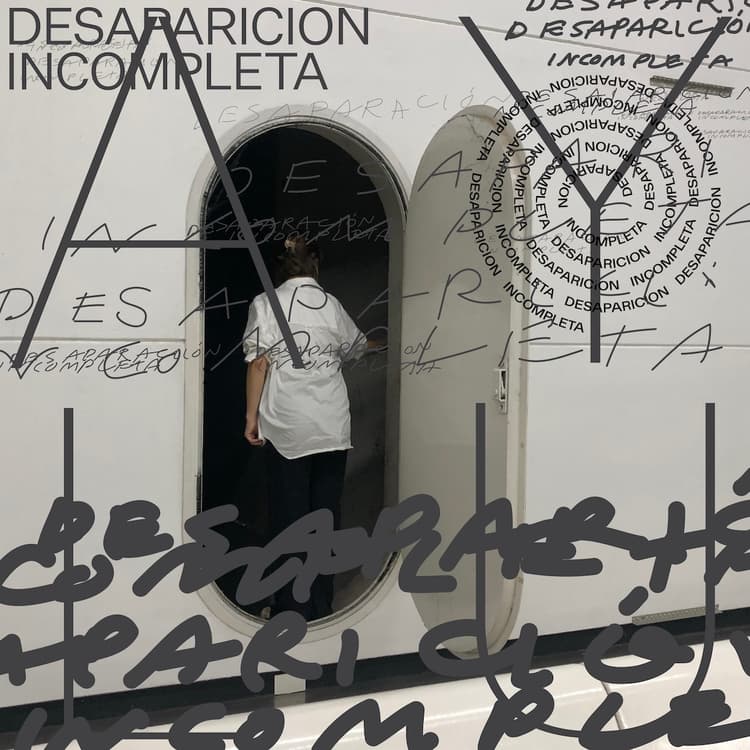 | aylu's debut release for Other People Music originally composed for Alan Martin Segal’s “Desaparición Incompleta” (2020) Recorded in Belcebú Studios by Luciano Vitale, Buenos Aires, Argentina, 2021 and 2023 Voice: Luciano Vitale Tenor Saxophone: Rosa Nolly Bustos Artwork: Maziyar Pahlevan Cover photo: Brenda Erdei at Televisión Pública’s Studio, Buenos Aires, Argentina Mastering: Pantxo Bertin
| ||||||||||||||||||||||||||||||||||||||||||||||||||||||||||||||||||||||||||||||||||||||||||||||||||||||||||||||||||||||||||||||||||||||||||||||||||||||||||||||||||
Mar 2025 OP081 | Advanced Surface HabitatSurface Access | Delectable and on point duc techno, Advanced Surface Habitat is the debut 12" by French duo Surface Access.
| ||||||||||||||||||||||||||||||||||||||||||||||||||||||||||||||||||||||||||||||||||||||||||||||||||||||||||||||||||||||||||||||||||||||||||||||||||||||||||||||||||
Feb 2025 OP083 | In RuptureEnxin/Onyx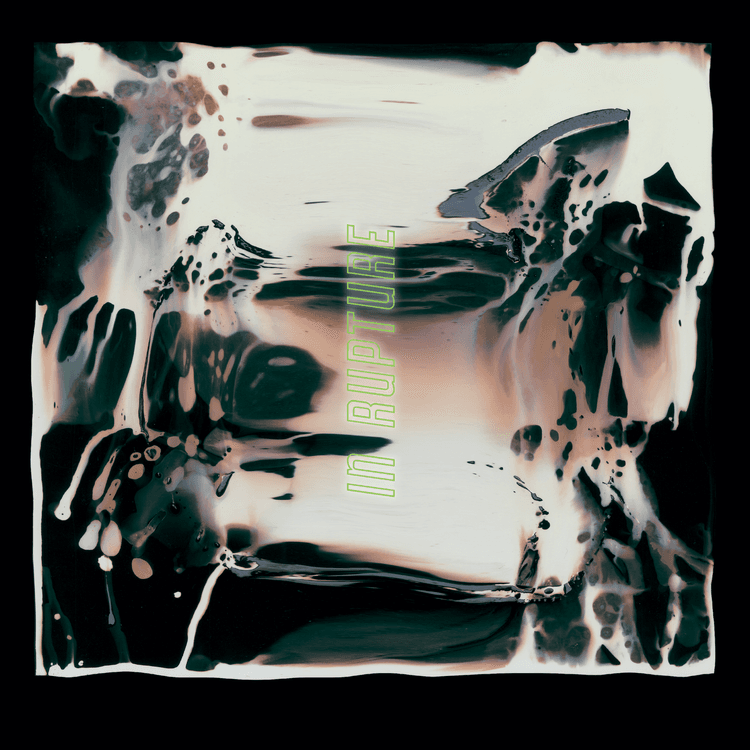 | Enxin/Onyx, the duo of Nicky Mao/Hiro Kone and Tot Onyx (formerly group A), joins Other People with their debut album "In Rupture," capturing the same mesmerizing energy for which their live sets have become known. “In Rupture” is not painless but in rupture lies possibility. The elasticity of this time pitching us across unknown terrain, revealing new potentialities, eclipsing static being. Whether in breach, collision, shimmer or severance, Enxin/Onyx explores these as occasions for transformation. Peeling back the layers through discord and harmony, exciting the inversion of expectation, towing the listener to depths and back up again to illuminate the senses. At times metallic and feral, at others murky and sharp, each song serves as an offering for all that is in rupture; body, spirit, land, ecosystem. The opening track “A Void” calls to mind some mutation in its mechanical ecstasy, but for what purpose remains unknown. Even in the near moments of stillness, “Needle Pierces the Threshold” breathes a forceful disquietude. Tommi’s vocals pulling the listener down into some subterranean madness, to unravel upwards from all sides, flooding the once parched landscape. In “Embers Kiss the Eye”, all of time emerges in one moment, compelling the subject’s gaze towards a new horizon. The album follows its subjects through exile, exhumation and discovery. Through this process plates shift, fissures are revealed and what once appeared to be indomitable absolutes crack, pointing towards their inevitable collapse. To be in rupture is regeneration, to be in rupture is to return.
| ||||||||||||||||||||||||||||||||||||||||||||||||||||||||||||||||||||||||||||||||||||||||||||||||||||||||||||||||||||||||||||||||||||||||||||||||||||||||||||||||||
Nov 2024 OP080 | OfferingOkokon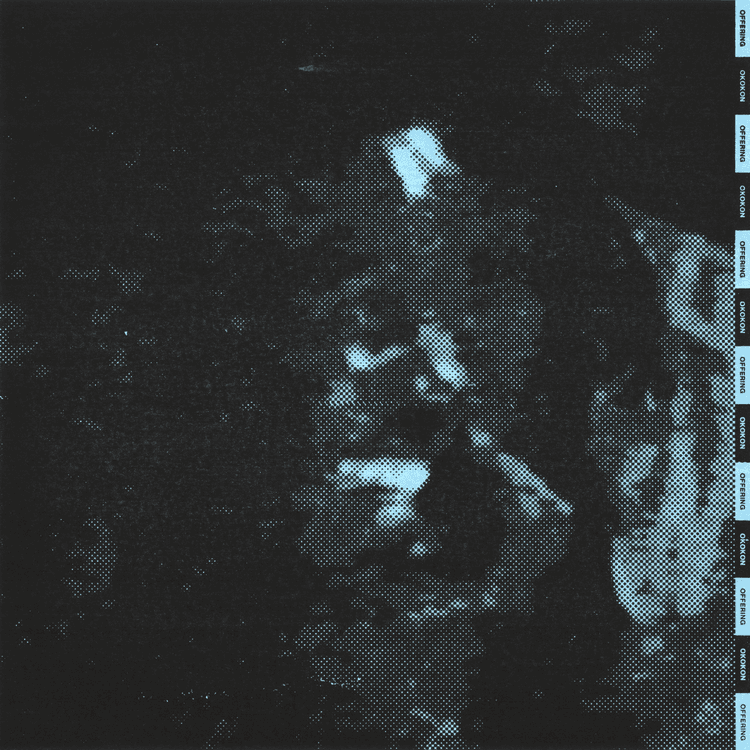 | Okokon returns to Other People with his sophomore album, 'Offering', delving deeper into the lush and cinematic soundscapes he first explored on his debut album, 'Turkson Side'. While primarily working in visual arts, Africanus Okokon, who records under his surname, bridges his artistic practices in 'Offering', using his masterful collage techniques to create his most personal work yet. Defying easy categorization, the album melds influences from dream pop, avant-garde folk, psychedelia, trip hop, and dub, with traces of field recordings seamlessly blended throughout to form a cohesive whole. 'Offering' sees Okokon confronting and negotiating a sudden and unexplained death that occurred in his childhood and the complex emotions left in its aftermath, acting as his main inspiration when making the album. This ambiguity is something that permeates throughout, with Okokon wanting to explore the ambivalence and sometimes uneasiness of contradicting emotions appearing simultaneously, alluded to in the album title. This is also reflected in how the album tracks each inhabit different narrators with varying perspectives on the same events. The result being a hauntingly beautiful album, with recurring themes of death, growth, sacrifice and spirituality ever present.
| ||||||||||||||||||||||||||||||||||||||||||||||||||||||||||||||||||||||||||||||||||||||||||||||||||||||||||||||||||||||||||||||||||||||||||||||||||||||||||||||||||
Oct 2024 OP084 | Narraciones de un RetornoEli Wewentxu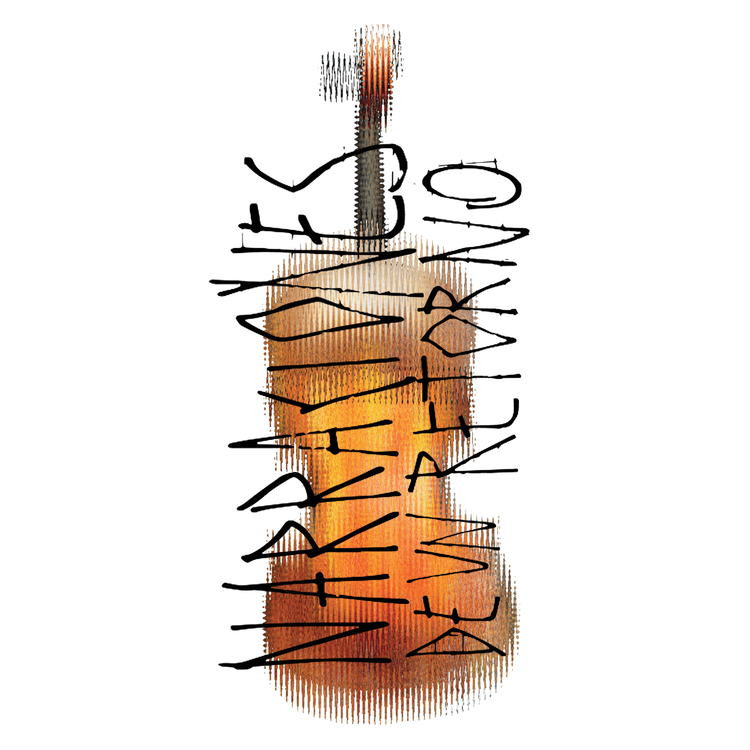 | "Narraciones de un Retorno" es una serie de siete composiciones para violín y txompe, acompañadas de un zine de 56 páginas realizado por el violinista y artista sonoro Eli Wewentxu. El zine fue diseñado por Andrés Yañez y cuenta con contribuciones de Daniela Catrileo y Nekul Nuñez. La música fue grabada en Other People Studios (Berlin) en el verano y otoño de 2024. Con este lanzamiento, Eli diluye el límite entre la música y la narración oral y comparte la memoria sonora del territorio al que su familia pertenece desde hace varias generaciones. Partiendo de ahí, Eli dialoga la forma en que encontró un lenguaje propio mediante la música, tornando la estética eurocéntrica de instrumentos como el violín en una herramienta identitaria. Esta labor transita temáticas como la sequía en su lof ubicado en Chomio; la experiencia de crecer en el espacio partido entre el campo y la ciudad de Padre las Casas; la relación de su familia con la carpintería y también con el catolicismo instaurado; la prohibición de hacer música con el txompe; poéticas y prácticas críticas de la hegemonía del violín impuesta por la academia; y el retorno al territorio después de haber vivido lejos, al otro lado del mundo en otro continente. Eli Wewentxu es un artista mapuche de PLC, Gulumapu - Wallmapu, llamado hoy centro sur de Chile. Se formó como violinista desde temprana edad. En lo creativo trabaja con la composición musical, arte sonoro y audiovisual. Su búsqueda tiene como foco resignificar la escucha y mirada desde una perspectiva propia ligada a su identidad cultural, contexto territorial y crítica hacia el mundo académico occidental. Actualmente vive en su comunidad en Chomio mapu, donde realiza un archivo sonoro del territorio, trabaja con la tierra y cuida animales. La música y el documento con la traducción al inglés vienen en un USB con forma de violín. -- "Narraciones de un Retorno" is a series of seven compositions for violin and txompe accompanied by a 56 page zine by violinist and sound artist Eli Wewentxu. The zine was designed by Andrés Yañez and features contributions by Daniela Catrileo and Nekul Nuñez. The music was recorded at Other People Studios (Berlin) in Summer and Fall, 2024. Throughout "Narraciones de un retorno", Eli shares the sound-memory of the territory in Wallmapu to which his family has belonged for generations. The work addresses topics such as the drought in the Chomio lof; the experience of growing up in the between space between the countryside and the city of Padre las Casas, Eli's family's connection with carpentry, their relationship with enforced Catholicism, the prohibition to make music with the txompe, poetics and practices critical of the violin’s hegemony imposed by the academy and finally a narration of Eli's return to the territory after having lived far away on another continent. Eli Wewentxu is a Mapuche artist from PLC, Gulumapu, Wallmapu, called today south central Chile. He trained as a violinist from an early age and works with musical composition, sound art, and audiovisual media. His work focuses on reshaping the act of listening from a perspective connected to his cultural identity, territorial context, and critique of the Western academic world. He currently lives in his community in Chomio mapu, where he makes a sound archive of the territory, works with the land and takes care of animals. Music and English translation document come in violin-shaped USB stick.
| ||||||||||||||||||||||||||||||||||||||||||||||||||||||||||||||||||||||||||||||||||||||||||||||||||||||||||||||||||||||||||||||||||||||||||||||||||||||||||||||||||
Jul 2024 OP077 | VersusPatrick Higgins | This album marks a new direction and development of Higgins' acclaimed work as a guitarist and composer, drawing on electronic music, free improvisation, and avant-garde modern composition, VERSUS is a highly emotional and expressive work that pushes Higgins' own instrumental virtuosity into new territories. He performs guitar, keyboards, synthesizer, drums and laptop programming across a 9-track record that traverses and transforms many aspects of Higgins' earlier work. The title track "Versus" was premiered at Monom Studios in Berlin, in a configuration for 75 surround sound speakers. Combining composed and written elements with highly-focused lyrical improvisations, VERSUS shows Higgins at his best — bridging styles and innovating new music that is harsh while seductive, intense while inviting, and always unexpected. The recording is itself a stunning achievement of electro-acoustics, beautifully created organic immersive stereo-scapes where instruments and electronics become indistinguishable, hi-fi audio at its best and most innovative. (Headphones or high quality speakers recommended.)
| ||||||||||||||||||||||||||||||||||||||||||||||||||||||||||||||||||||||||||||||||||||||||||||||||||||||||||||||||||||||||||||||||||||||||||||||||||||||||||||||||||
Jun 2024 OP079 | Middle of Nowhere Büşra Kayıkçı, Nicolás Jaar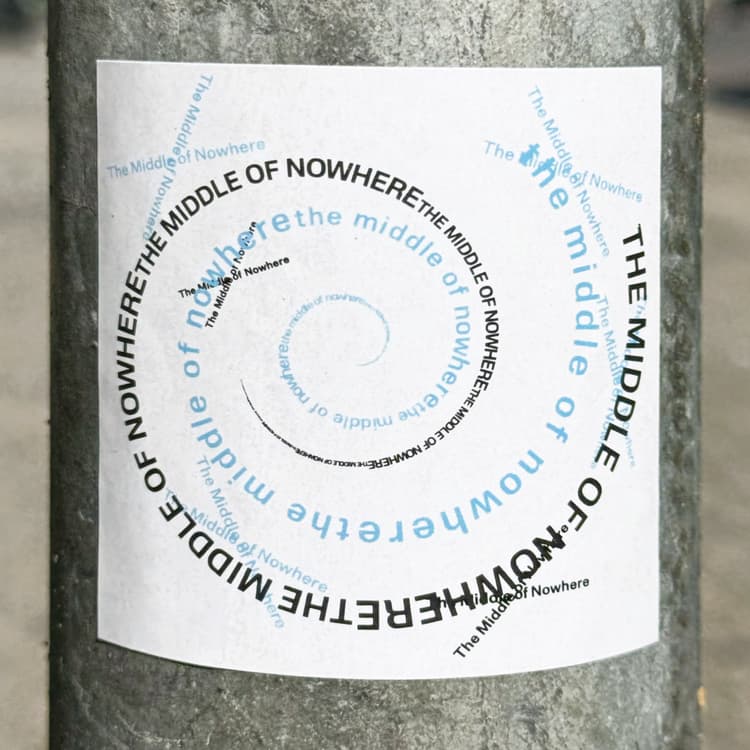 | Nicolás Jaar Rework of Büşra Kayıkçı “The Middle of Nowhere”
| ||||||||||||||||||||||||||||||||||||||||||||||||||||||||||||||||||||||||||||||||||||||||||||||||||||||||||||||||||||||||||||||||||||||||||||||||||||||||||||||||||
Apr 2024 OP076 | VibranteValentina Villarroel | "Vibrante" by Valentina Villarroel, 15 tracks composed of field recordings recorded through the practice of silent walks and the use of various experimental microphone techniques. Valentina Villarroel is a sound artist and phonographer who explores the intricate dynamics within various Southern ecosystems. Her work revolves around the profound potential of acoustic ecology, particularly in the face of encroaching real estate development on natural spaces. She also delves into the consequences of sound pollution on numerous species, contributing to their decline or disappearance. In recent years, her focus has extended to urban soundscapes and significant sonic events, such as the October 18th protest in Chile. With a solid background in bioacoustics applied to both human and animal well-being, Valentina assumes the role of co-director at AOIR Sound Laboratory. There, she spearheads an interdisciplinary initiative that centers sound as its core element. This includes the creation of the sonic cartography portal aoir.cl, as well as the development of handmade electronic devices like the Bowerbankii and the creation of various experimental microphones. This release delves deep into the world of audible and inaudible soundscapes and their ability to give us an alternate knowledge of reality.
| ||||||||||||||||||||||||||||||||||||||||||||||||||||||||||||||||||||||||||||||||||||||||||||||||||||||||||||||||||||||||||||||||||||||||||||||||||||||||||||||||||
Nov 2023 OP073 | IntihaNicolás Jaar, Ali Sethi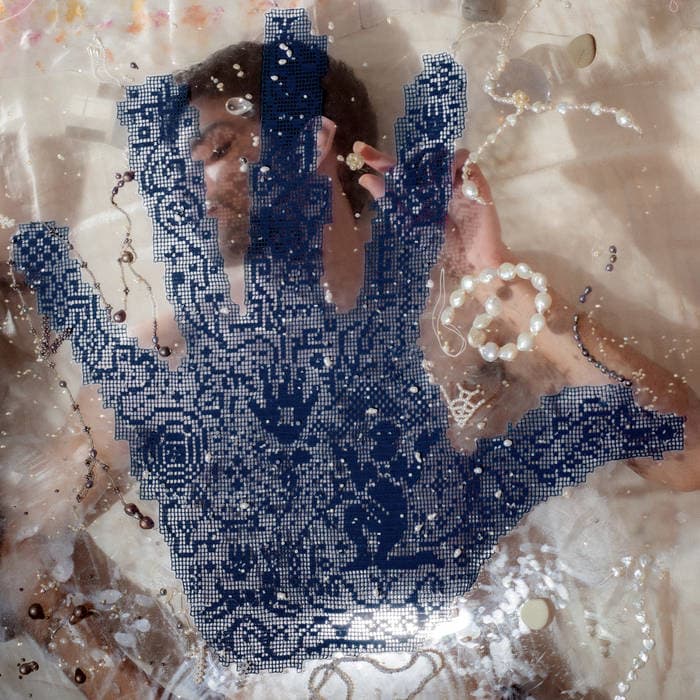 | Singer, songwriter and author Ali Sethi had been entranced by Jaar’s music long before they began collaborating. He’d absorbed the sounds over a number of years, listening casually and taking in their subtleties in bars and rooftop parties across Lahore and London. “It felt familiar to me, that sense of adventure you have when you hear his music, like a tale that teases you and plays with your expectations as it unfolds,” says Sethi. “In that sense it resembled the leisurely improvised ghazals and qawwalis I grew up hearing in Pakistan.” So when the two were finally introduced by Indian visual artist Somnath Bhatt, a regular Jaar collaborator who also handled the album’s artwork, Sethi was well prepared. He began to sketch out voice notes using loops snipped from Jaar’s acclaimed 2020 album ‘Telas’, improvising vocalizations and seductive Urdu poems over Jaar’s weightless, time-bending productions. Jaar was astonished by the result; “It was what ‘Telas’ had been missing,” he explains. Improvisation has been important to the Chilean artist for many years. Before he had even started making electronic music, Jaar jammed on accordion with friends on the street in New York City. It’s at the core of his practice, “a moment in time,” in his own words. ‘Intiha’, the opening track on the album, is the first they finished together, and positions Sethi’s evocative phrases over Jaar’s faded, metallic percussion. It’s a perfect proof of concept, re- imagining the world of ‘Telas’ and augmenting it with a sense of ancestral melancholy and giddy euphoria that’s truly transformational. Sethi is best known globally for his attempts to revive the ghazal, an ancient poetic form that was taken by Sufi mystics from the Arab world to Persia and throughout the Indian subcontinent, where it captivated the royal court. It’s been unfashionable in the last few decades, a mannered style associated with decadence, and Sethi offers it a new lease of life through his playfully revisionist covers and renditions. (His most popular single ‘Pasoori’ is a global phenomenon, one of the most Googled songs of 2022, with hundreds of millions of listeners tuning into its timeless message of forbidden love.) Sethi updates the ghazal form by using his years of training in raga music, lifting metaphors that reflect his journey as an out-of- place queer kid in Pakistan who became a US citizen and now lives in New York City. These stories give his work a gently subversive edge; on ‘Nazar Se’, he sings a soft and sensual poem from his teacher Farida Khanum – the queen of ghazal – over slowed-down samples from ‘Telas’, transforming a polite lyric about the pleasures of eye-contact into a reverie on cruising. Jaar responds by adding new improvised elements, prompting a playful back-and-forth that’s echoed throughout the record. Genre is evoked, but in gestures only – the music transcends its formulae, using cultural reverberations and distinct repetitions that lull listeners into a placeless trance. Jaar takes the ground away on ‘Dard’, leaving Sethi’s vocals to soar unaccompanied. The title means pain or pathos, and Sethi’s rendition of this 19th century ghazal is a whisper to the beloved, a paean to longing itself that is stretched out over almost eight minutes and subtly punctuated by Jaar’s feathery instrumentation. The duo experiment further on ‘Chiragh’, a dirge that’s alchemized into an ear-splitting, dubbed-out blare, or “a scream from inside,” in Sethi’s own words. ‘Muddat’ meanwhile reconciles the lusty rebelliousness of the medieval ‘kotha’ or courtesan’s salon with the madness of a modern-day rave, veering cryptically into techno but staying tethered to Sethi’s cries for union with his Beloved. Between them, Jaar and Sethi have spawned a body of work that seduces but challenges us at every moment, articulating new identities that evoke several cultural contexts at once. It’s “a sound that I hope can operate on multiple levels,” says Jaar, a borderless, playfully ambiguous set of improvisations that sing confidently of love, loss and belonging.
| ||||||||||||||||||||||||||||||||||||||||||||||||||||||||||||||||||||||||||||||||||||||||||||||||||||||||||||||||||||||||||||||||||||||||||||||||||||||||||||||||||
Oct 2023 OP074 | Weavings IIValentina Magaletti, Nicolás Jaar, Oren Ambarchi, Tomoko Sauvage, Khyam Allami, Antonina Nowacka, Paweł Szamburski, Angel Bat Dawid, Raphael Roginski, Resina, Aho Ssan, Pak Yan Lau | A durational improvisation structured in the manner of a long fabric of sound, Weavings is conceived by Nicolás Jaar. The original project was recorded in 2020 during the pandemic, with performers joining remotely from around the world. Already released as an album in digital form, it’s a timeless document of a discomfiting time. 'Weavings 2' was recorded a year later, while the pandemic still raged, this time IRL in Kraków as Unsound Festival’s closing concert. Performers were packed onto a stage, using their own unique methodologies to knit a subtly-hued sonic mesh. The concept behind 'Weavings 2' remained the same: participants did not rehearse beforehand, and performed in duos and clusters according to a visual score. The ensemble included four artists from the first online Weavings – Aho Ssan, Angel Bat Dawid, Paweł Szamburski, Resina - and Jaar, who also once again mixed the show live. The first-time performers – or Weavers – were Antonina Nowacka, Khyam Allami, Oren Ambarchi, Pak Yan Lau, Raphael Rogiński, Tomoko Sauvage and Valentina Magaletti. The musicians are therefore not only ‘woven’ between one another during a single concert, but some of them between the first and second performances, online and IRL. Deep listening and the concept of waiting also connects the performances, both from the perspective of the audience and also the performers, who would very often sit in silence, as instructed by the score. For 'Weavings 2', the concert has been mastered and spliced into individual tracks, and like its predecessor feels like a coherent album, where the sum is greater than its parts. And again, it’s also a document of the pandemic, now examining the period in which we stepped out of our isolation and towards each other. A durational improvisation bringing together twelve artists from around the world, the project is a testament to the ability of music to communicate in a language beyond words.
| ||||||||||||||||||||||||||||||||||||||||||||||||||||||||||||||||||||||||||||||||||||||||||||||||||||||||||||||||||||||||||||||||||||||||||||||||||||||||||||||||||
Oct 2023 OP072 | RhizomesAho Ssan, Nyokabi Kariũki, Blackhaine, Nicolás Jaar, Resina, clipping., 9T Antiope, James Ginzburg, Exzald S, Valentina Magaletti, Angel Bat Dawid, Moor Mother, Mondkopf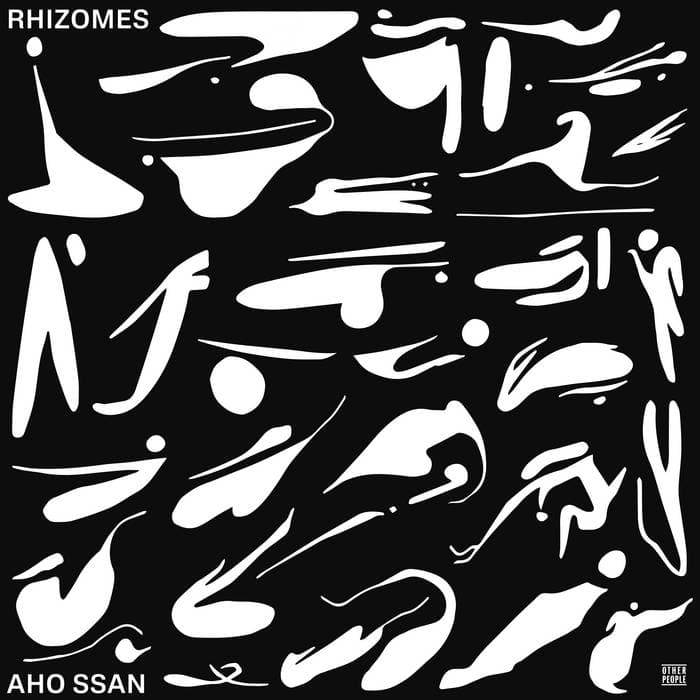 | Aho Ssan debuts on Other People with second solo album and book ‘Rhizomes’ featuring Nicolás Jaar, Moor Mother, Angel Bat Dawid, clipping., Blackhaine and more Paris based composer Aho Ssan, the artist moniker of Niamké Désiré, presents his new full-length ‘Rhizomes’ on the Other People label following his debut LP ‘Simulacrum’ (2020) and collaborative record ‘Limen’ (2022) with fellow musician KMRU. ‘Rhizomes’ was commissioned by Other People, Donaufestival and INA GRM. The project draws inspiration from a concept coined and developed between Gilles Deleuze and Felix Guatarri. The idea of an ever evolving structural model, constantly in motion and spreading out in all directions at once. It has no beginning and no end, but always remains in a middle, through which it grows and overflows. “The root thought is the one that kills everything around itself while the rhizome is the root that stretches out to meet other roots,” Désiré explains considering the works of French writer Édouard Glissant who addresses questions of identity, crossbreeding of cultures and its evolution. Much like the name it borrows, Aho Ssan’s ‘Rhizomes’ is a multimedia project that embarks on a myriad of disparate, unique musical and artistic partnerships. This piece adapts this concept to explore the influence of sound materials on creation, the appropriation of a sound object, and the collaborative nature of a composition that responds to modernity. “Rhizome represents an underground stem system that fosters connections between various organisms and allows them to flourish collectively. It’s an album that celebrates collaboration and brings together a diverse group of talented artists,” Désiré continues. Aho Ssan collaborated with a comprehensive cast of artists to create a musical rhizome including Nyokabi Kariuki, Josefa Ntjam, Blackhaine, Nicolás Jaar, Resina, Rắn Cạp Đuôi, Richie Culver, clipping., Lafawndah, KMRU, Kassel Jaeger, 9T Antiope, James Ginzburg, Exzald S, Valentina Magaletti, Moor Mother, Angel Bat Dawid and Mondkopf. Cooperation and community are at the root of this project and the lens through which all the compositions can be understood through. In conjunction with the album, ‘Rhizomes’ comes complete with a set of illustrations by Kim Grano in a book release. The drawings become a hybrid language, each an emotional response to the musical half. The book contains an extended version of the album with 3 additional songs and 2 longer versions of the album songs. It also includes a sample pack by Aho Ssan and a collection of solo tracks by Elliot Blaise-Lassire, KMRU, Lamin Fofana, Brodinski & Sébastien Forrester, Valence Drake, 9T Antiope, Exzald S and Valentina Magaletti. The extended version package is only accessible through the QR codes in the book.
| ||||||||||||||||||||||||||||||||||||||||||||||||||||||||||||||||||||||||||||||||||||||||||||||||||||||||||||||||||||||||||||||||||||||||||||||||||||||||||||||||||
Sep 2022 OP068 | Patience of a TraitorSaint Abdullah, Eomac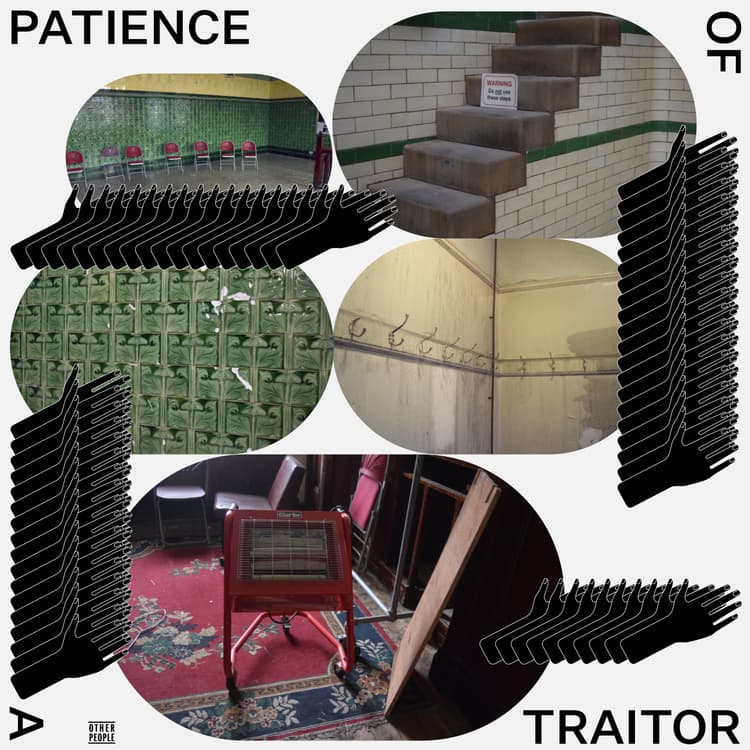 | Tehran-born, NY based brothers Mohammad and Mehdi collaborate with Ian McDonnell, a.k.a. Eomac on a new record entitled “Patience of a Traitor”. Inspired by the traditional bath houses in their native Tehran, the brothers say: “This record speaks to preserving the things that are timeless, through revisiting the past. The traditional Persian bath house — its architecture, the role it played in keeping, building community, the bathing rituals — served as our ultimate symbol. Now we drink from one cup, and fill the jar with the other.” In working with Eomac, they state: “With Ian, we wanted to explore as wide as possible. There’s a real trust in how we treat, explore samples. We translate and share stories and references all the time. What’s also been interesting to learn is that we both could see fundamental aspects in our respective cultures that are beautiful yet corrupted by various forces. Ian shared memories as a child of feeling deeply connected to the hymns and musical traditions of Christianity and of a connection to the beautiful messages of love at its core. But the church and government used Catholicism to suppress and control the Irish people for centuries. In this sense, the Catholic church in Ireland, or Shia Islam in Iran, have a lot in common. Explosive emotion used to tie one’s hand tightly to the established power.” Saint Abdullah is the moniker of Mohammad and Mehdi, New York based Iranian-Canadian brothers working across sound. Inspired by Iran’s religious, political and cultural history, the project was formed out of “a deep frustration with the way the West perceives – and treats – Muslims and the Islamic faith”. They aim to “challenge stereotypes and act as a conduit between unnecessary enemies”. They have released on labels such as Purple Tape Pedigree, Cassauna, Psychic Liberation, Important Records and Room40. Ian McDonnell, a.k.a. Eomac, is a composer, producer, DJ and label owner. He has released genre-spanning music via The Trilogy Tapes, Stroboscopic Artefacts, Bedouin Records, Killekill, his own Eotrax imprint and the iconic label Planet Mu with his 2021 album, ‘Cracks’. His music draws from obscure samples and raw sound design in an ongoing search for musical and collective unity through intense, visceral music for body and soul.
| ||||||||||||||||||||||||||||||||||||||||||||||||||||||||||||||||||||||||||||||||||||||||||||||||||||||||||||||||||||||||||||||||||||||||||||||||||||||||||||||||||
Aug 2022 OP067 | AddioDienne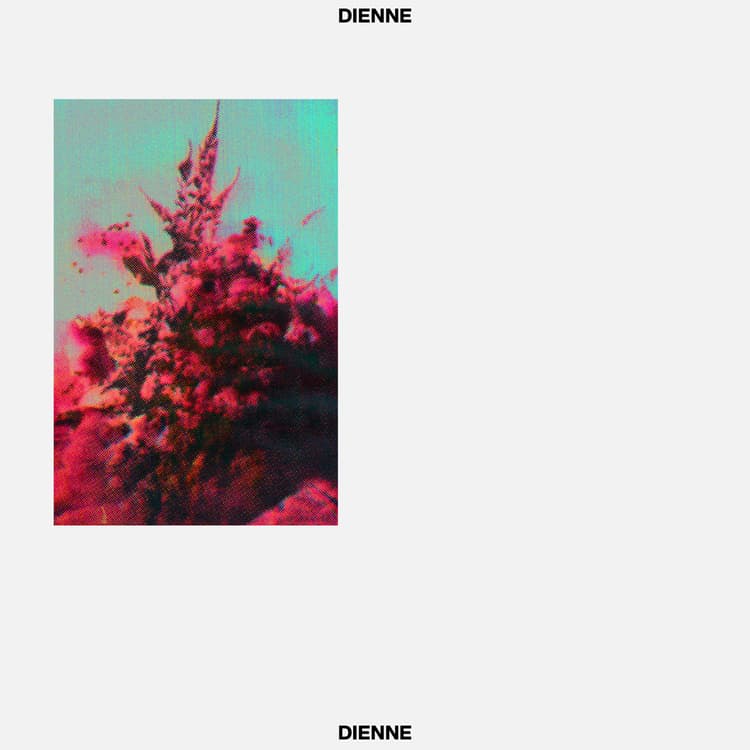 | Dienne’s ‘Addio’ is a 32 minute study on loss and mourning. Following the death of her grandmother due to Covid-19, and unable to say a proper goodbye due to travel restrictions, Dienne set out to give her “Addio” through musical form. She lets objects fall, leaves windows open, and lets the wind dust off the shelves. This is the sound of everyday mourning, a taste instead of an event. A lingering, broken and patient work of undeniable beauty. Dienne is a Belgian composer, vocalist and multi-instrumentalist. She builds songs and soundscapes portraying images & stories that play behind her eyes. Starting with the oboe as a child, before adding the piano and flute to her repertoire, she later produced soundtracks for theater and dance performances.
| ||||||||||||||||||||||||||||||||||||||||||||||||||||||||||||||||||||||||||||||||||||||||||||||||||||||||||||||||||||||||||||||||||||||||||||||||||||||||||||||||||
May 2022 OP059 | Would It Sound Just As Bad If You Played It Backwards? A Collection of Sounds from the Studio Eksperymentalne Polskiego Radia (1959-2001) Vol. IIWłodzimierz Kotoński, Bohdan Mazurek, Elzbieta Sikora, Bernadetta Matuszczak, Magdalena Dàugosz, Barbara Zawadzka, Krzysztof Knittel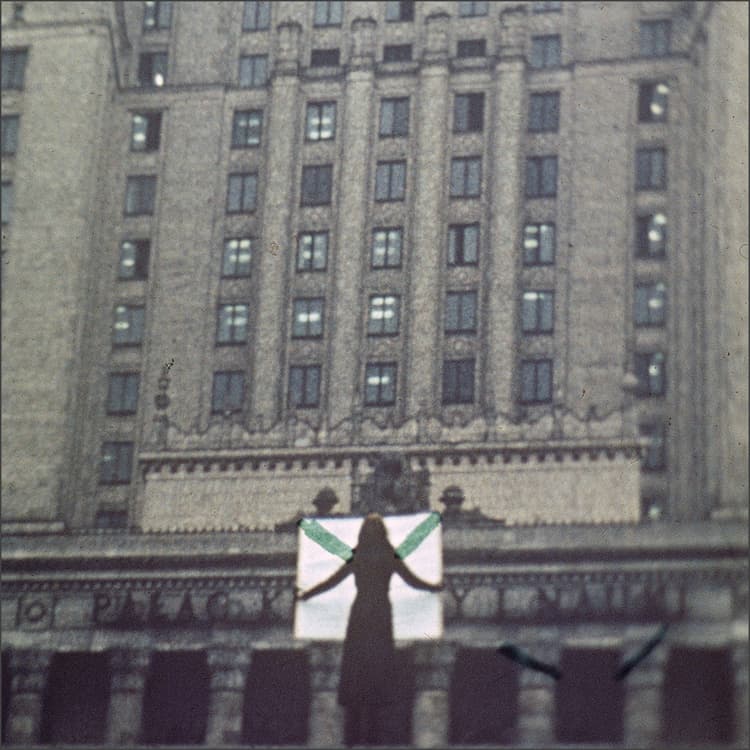 | “Would it sound just as bad if you played it backwards?” assembles a collection of audio experiments created at the Polish Radio Experimental Studio (PRES) from 1959 to the beginning of the millennium. These exceptional works are presented alongside images from the Polish artist Zofia Kulik, whose career has spanned over 50 years, beginning in the late 1960s until the present day. While PRES and Kulik remain important instances in the recent history of the Polish avant-garde, presenting them together in one release may not seem like an obvious choice. There are, of course, some historical intersections — the most notable being a shared interest in Polish architect Oskar Hansen’s Open Form theory which encouraged a modular theory of architecture that combined strategies of indeterminacy with collective participation. Hansen’s ideas influenced Kulik’s early works and also manifested in the PRES’s legendary “black room” music studio which was designed by Hansen himself, and was equipped with moveable sound panels that absorbed or reflected sound to promote a greater, creative freedom from its users. And yet, as it usually goes, the most obvious connections are usually the most deceitful. Whereas Kulik initially followed Open Form, she later turned away from it. And as for the black room—it mostly worked in theory but not in practice. What is it then that makes the two work together? Within the realm of art history, Kulik’s work is often divided into two periods: her early, artistic endeavors connected to Open Form, and the KwieKulik collaboration, followed by her later turn towards a closed form, characterized by a departure from processual art in favor of material, ("closed") works of art. Yet these terms don’t necessarily bring out the essence of Kulik’s works. The artist explained that Hansen’s Open Form was important in how it opened his students to perceive their environments in a different way. Reminiscing about those times, she states, “I wanted to catch the moment when the object I was looking at was real. I decided that as a static item it can never be real — it’s possible only in the process of looking at it. That translates to the object being recorded and presented in certain sequences [...] there’s an astonishment in the materiality of objects, colours, transformations.” Kulik’s works chosen for this release are taken from two projects, Lady Halina and Cones and Excursion with White Screen. Route: Cemetery, The Palace of Culture (1968-71), which were included in Kulik’s diploma at the Sculpture Department of the Academy of Fine Arts in Warsaw. The projects were slide projections presented on three screens, with specific temporal sequencing. Lady Halina and Cones presents a woman’s body, its forms, geometrical figures, and shapes undergoing a process of transformation. About Excursion with White Screen, Kulik says "this white sheet was supposed to signify an empty screen in different spatial situations in the city. I thought that I would later project a slide onto that screen, imposing another image afterwards, like a collage, but suddenly that screen became a material object instead of an abstract, pure idea of a potential image within an image. It became an object in of itself and I began to notice that the screen sometimes wrinkled in the cemetery, and sometimes moved with the wind.” A myriad of new meanings and references today from Kulik’s sequenced projects. From the perspective of a young woman, Lady Halina and Cones poses questions about the objectification of women, the boundaries of their agency, and the recognition of their subjectivity within the patriarchal world in which their bodies often function as objects of control. In Excursion with White Screen the symbolism of a clear white sheet placed against a background image of the cemetery or the Palace of Culture questions the role of these religio-political monuments, the white screen acting as an empty, and potentially alternative, space between them. The music chosen for “Would it sound just as bad if you played it backwards?” spans almost the entire history of the Polish Radio Experimental Studio, including tracks as early as Włodzimierz Kotoński’s Concrete etude, Study for One Cymbal Stroke (1959), and ending chronologically with Wolfram’s rendition of Bogusław Schaeffer’s Symphony. Electronic Music (2001). Just as with Kulik’s works, the contemporaneity of the works presented is astonishing. The album opens and closes with Krzysztof Knittel’s 1980s compositions, Lapis and Poko, which perfectly encapsulate his descriptions of his experience in the studio: “We acted without any initial plans or electronic scores, there were no goals to be achieved, no creative method defined in advance. We used our aesthetic and technological knowledge freely, the shapes of tracks emerged during our shared work in the studio.” The album also includes Mictlan I (1987) and Yes and No (1990), two stunning works by Magdalena Długosz, who studied composition with Krystyna Moszumańska-Nazar and music theory with Józef Patkowski. Since 1979 she has been teaching in the Electroacoustic Music Studio at the Academy of Music in Kraków. Also featured is the avant-garde composer Elżbieta Sikora, Knittel’s fellow member fromthe KEW Composers’ Group, with her stark pieces Letters to M (1980) and View from the Window, (1971), and Barbara Zawadzka, whose Greya (1987) is meant to evoke different sequencings of the colour grey. In this piece, particularly, it’s hard not to appreciate the similarity to Kulik’s notion of sequencing and transformation of objects. Bernadetta Matuszczak’s Libera me (1991) is an example of a somewhat different creative experience. In a radio interview conducted by Marek Zwyrzykowski in 1992, the composer stated that she wasn’t intending to discover any “extraordinary electronic effects”, instead she focused on the piece’s “expressive layer.” With the help of Tadeusz Sudnik from PRES, she incorporated into Libera Me the characteristic melody from the Polish version of the Orthodox hymn Święty Boże, Święty Mocny [Holy God, Holy Mighty, Holy Immortal] and combined it with sounds of explosions and instrumental recordings in response to the US’s interventions during the Gulf War. Eugeniusz Rudnik, the composer and sound engineer whose name is among those most strongly associated with PRES, contributes with his Epitaph for Stones, (1984) a dedication to Jerzy Popiełuszko, the Polish Roman Catholic priest associated with the Solidarity trade union and anti-communist movement who was murdered by the Security Service. Bohdan Mazurek, who took over the reins of the studio from Rudnik in 1962 is also included with his piece Canti (1973). As mentioned above, the album also includes Włodzimierz Kotoński’s seminal Concrete etude, Study for One Cymbal Stroke, a piece sourced from the single stroke of a mid-sized Turkish cymbal; it is often considered to be an important starting point for the development of experimental music in Poland. And, finally, the album features two performances of Bogusław Shaeffer’s Symphony. Electronic Music, the first by Bohdan Mazurek (1966), which remains very close to the composer’s score, and a contemporary version by Wolfram (2001), which takes much more creative freedom. In a text about his seminal work, Shaeffer stated that he “decided to include the factor of interpretation in a work that was greatly precise by nature” underlining the importance of shifting elements: “the development of music lies in individual elements shifting in the hierarchy of their functions.” Indeed, an interest in shifting hierarchies seems present in Kulik's powerful images and most of the sound pieces contained in this release. When the Polish Radio appointed Eugeniusz Rudnik to present PRES's technical capabilities to a conservative delegation of Soviet composers, he was met with a bitter reply: “Would it sound just as bad, if you played it backwards?” asked the rigid composers to Rudnik. His answer was to create Skalary, (1966) a multiversional piece which could be played from start to finish and from finish to start, at different speeds, as well as with altered left and right channel distribution. This modular openness calls to mind the empty sheet in Kulik's images. Whatever the context, its static emptiness among rigid urban monuments creates space for a different reality than that which those in power had in mind. This brings us back to Kulik's thoughts on her experiences as a student in the late 60s, a pivotal time in which she understood the process of looking and listening as central to reality itself, thereby shattering the rigidity of traditional forms and religio-political power: “I decided that as a static item, an object can never be real — it’s possible only in the process of looking at it.”
| ||||||||||||||||||||||||||||||||||||||||||||||||||||||||||||||||||||||||||||||||||||||||||||||||||||||||||||||||||||||||||||||||||||||||||||||||||||||||||||||||||
May 2022 OP056 | Would It Sound Just As Bad If You Played It Backwards? A Collection of Sounds from the Studio Eksperymentalne Polskiego Radia (1959-2001) Vol. IKrzysztof Knittel, Bohdan Mazurek, Magdalena Dàugosz, Barbara Zawadzka, Eugeniusz Rudnik, Bogusław Schaeffer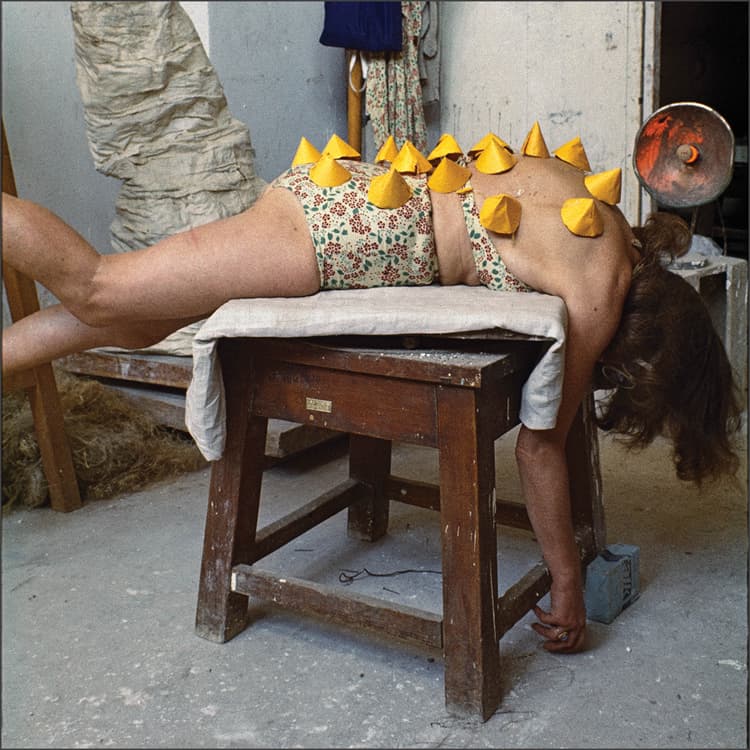 | “Would it sound just as bad if you played it backwards?” assembles a collection of audio experiments created at the Polish Radio Experimental Studio (PRES) from 1959 to the beginning of the millennium. These exceptional works are presented alongside images from the Polish artist Zofia Kulik, whose career has spanned over 50 years, beginning in the late 1960s until the present day. While PRES and Kulik remain important instances in the recent history of the Polish avant-garde, presenting them together in one release may not seem like an obvious choice. There are, of course, some historical intersections — the most notable being a shared interest in Polish architect Oskar Hansen’s Open Form theory which encouraged a modular theory of architecture that combined strategies of indeterminacy with collective participation. Hansen’s ideas influenced Kulik’s early works and also manifested in the PRES’s legendary “black room” music studio which was designed by Hansen himself, and was equipped with moveable sound panels that absorbed or reflected sound to promote a greater, creative freedom from its users. And yet, as it usually goes, the most obvious connections are usually the most deceitful. Whereas Kulik initially followed Open Form, she later turned away from it. And as for the black room—it mostly worked in theory but not in practice. What is it then that makes the two work together? Within the realm of art history, Kulik’s work is often divided into two periods: her early, artistic endeavors connected to Open Form, and the KwieKulik collaboration, followed by her later turn towards a closed form, characterized by a departure from processual art in favor of material, ("closed") works of art. Yet these terms don’t necessarily bring out the essence of Kulik’s works. The artist explained that Hansen’s Open Form was important in how it opened his students to perceive their environments in a different way. Reminiscing about those times, she states, “I wanted to catch the moment when the object I was looking at was real. I decided that as a static item it can never be real — it’s possible only in the process of looking at it. That translates to the object being recorded and presented in certain sequences [...] there’s an astonishment in the materiality of objects, colours, transformations.” Kulik’s works chosen for this release are taken from two projects, Lady Halina and Cones and Excursion with White Screen. Route: Cemetery, The Palace of Culture (1968-71), which were included in Kulik’s diploma at the Sculpture Department of the Academy of Fine Arts in Warsaw. The projects were slide projections presented on three screens, with specific temporal sequencing. Lady Halina and Cones presents a woman’s body, its forms, geometrical figures, and shapes undergoing a process of transformation. About Excursion with White Screen, Kulik says "this white sheet was supposed to signify an empty screen in different spatial situations in the city. I thought that I would later project a slide onto that screen, imposing another image afterwards, like a collage, but suddenly that screen became a material object instead of an abstract, pure idea of a potential image within an image. It became an object in of itself and I began to notice that the screen sometimes wrinkled in the cemetery, and sometimes moved with the wind.” A myriad of new meanings and references today from Kulik’s sequenced projects. From the perspective of a young woman, Lady Halina and Cones poses questions about the objectification of women, the boundaries of their agency, and the recognition of their subjectivity within the patriarchal world in which their bodies often function as objects of control. In Excursion with White Screen the symbolism of a clear white sheet placed against a background image of the cemetery or the Palace of Culture questions the role of these religio-political monuments, the white screen acting as an empty, and potentially alternative, space between them. The music chosen for “Would it sound just as bad if you played it backwards?” spans almost the entire history of the Polish Radio Experimental Studio, including tracks as early as Włodzimierz Kotoński’s Concrete etude, Study for One Cymbal Stroke (1959), and ending chronologically with Wolfram’s rendition of Bogusław Schaeffer’s Symphony. Electronic Music (2001). Just as with Kulik’s works, the contemporaneity of the works presented is astonishing. The album opens and closes with Krzysztof Knittel’s 1980s compositions, Lapis and Poko, which perfectly encapsulate his descriptions of his experience in the studio: “We acted without any initial plans or electronic scores, there were no goals to be achieved, no creative method defined in advance. We used our aesthetic and technological knowledge freely, the shapes of tracks emerged during our shared work in the studio.” The album also includes Mictlan I (1987) and Yes and No (1990), two stunning works by Magdalena Długosz, who studied composition with Krystyna Moszumańska-Nazar and music theory with Józef Patkowski. Since 1979 she has been teaching in the Electroacoustic Music Studio at the Academy of Music in Kraków. Also featured is the avant-garde composer Elżbieta Sikora, Knittel’s fellow member fromthe KEW Composers’ Group, with her stark pieces Letters to M (1980) and View from the Window, (1971), and Barbara Zawadzka, whose Greya (1987) is meant to evoke different sequencings of the colour grey. In this piece, particularly, it’s hard not to appreciate the similarity to Kulik’s notion of sequencing and transformation of objects. Bernadetta Matuszczak’s Libera me (1991) is an example of a somewhat different creative experience. In a radio interview conducted by Marek Zwyrzykowski in 1992, the composer stated that she wasn’t intending to discover any “extraordinary electronic effects”, instead she focused on the piece’s “expressive layer.” With the help of Tadeusz Sudnik from PRES, she incorporated into Libera Me the characteristic melody from the Polish version of the Orthodox hymn Święty Boże, Święty Mocny [Holy God, Holy Mighty, Holy Immortal] and combined it with sounds of explosions and instrumental recordings in response to the US’s interventions during the Gulf War. Eugeniusz Rudnik, the composer and sound engineer whose name is among those most strongly associated with PRES, contributes with his Epitaph for Stones, (1984) a dedication to Jerzy Popiełuszko, the Polish Roman Catholic priest associated with the Solidarity trade union and anti-communist movement who was murdered by the Security Service. Bohdan Mazurek, who took over the reins of the studio from Rudnik in 1962 is also included with his piece Canti (1973). As mentioned above, the album also includes Włodzimierz Kotoński’s seminal Concrete etude, Study for One Cymbal Stroke, a piece sourced from the single stroke of a mid-sized Turkish cymbal; it is often considered to be an important starting point for the development of experimental music in Poland. And, finally, the album features two performances of Bogusław Shaeffer’s Symphony. Electronic Music, the first by Bohdan Mazurek (1966), which remains very close to the composer’s score, and a contemporary version by Wolfram (2001), which takes much more creative freedom. In a text about his seminal work, Shaeffer stated that he “decided to include the factor of interpretation in a work that was greatly precise by nature” underlining the importance of shifting elements: “the development of music lies in individual elements shifting in the hierarchy of their functions.” Indeed, an interest in shifting hierarchies seems present in Kulik's powerful images and most of the sound pieces contained in this release. When the Polish Radio appointed Eugeniusz Rudnik to present PRES's technical capabilities to a conservative delegation of Soviet composers, he was met with a bitter reply: “Would it sound just as bad, if you played it backwards?” asked the rigid composers to Rudnik. His answer was to create Skalary, (1966) a multiversional piece which could be played from start to finish and from finish to start, at different speeds, as well as with altered left and right channel distribution. This modular openness calls to mind the empty sheet in Kulik's images. Whatever the context, its static emptiness among rigid urban monuments creates space for a different reality than that which those in power had in mind. This brings us back to Kulik's thoughts on her experiences as a student in the late 60s, a pivotal time in which she understood the process of looking and listening as central to reality itself, thereby shattering the rigidity of traditional forms and religio-political power: “I decided that as a static item, an object can never be real — it’s possible only in the process of looking at it.”
| ||||||||||||||||||||||||||||||||||||||||||||||||||||||||||||||||||||||||||||||||||||||||||||||||||||||||||||||||||||||||||||||||||||||||||||||||||||||||||||||||||
Feb 2022 OP065 | WeavingsAho Ssan, Angel Bat Dawid, Dirar Kalash, Ellen Fullman, Księżyc, Laraaji, Nicolás Jaar, Paweł Szamburski, Resina, Rolando Hernández Guzmán, Wukir Suryadi, Ka Baird, Rully Shabara, Juliana Huxtable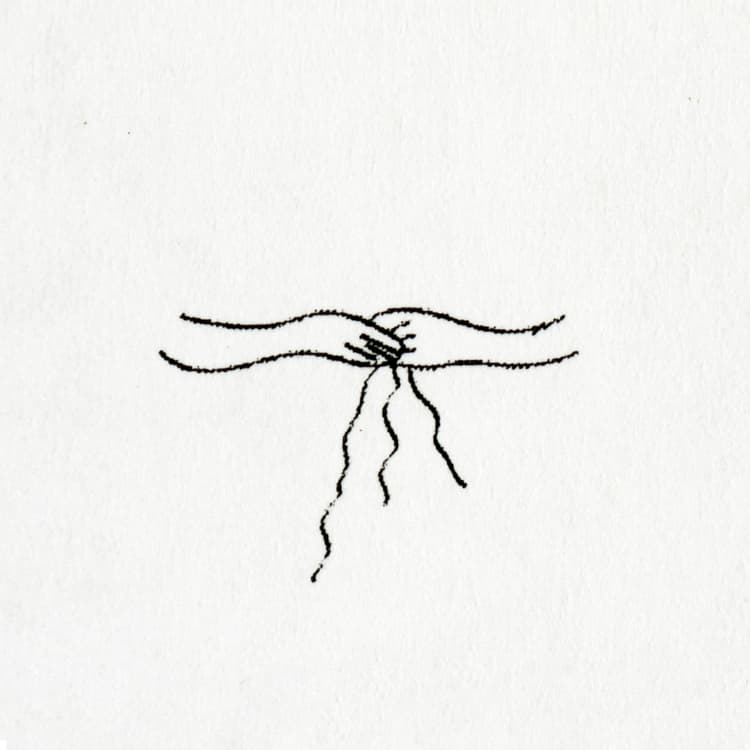 | Conceived by Nicolás Jaar, "Weavings" is a durational improvisation structured in the manner of a long fabric of sound. Artists include Aho Ssan, Ka Baird, Angel Bat Dawid, Ellen Fullman, Dirar Kalash, Księżyc, Laraaji, Jaar himself, Resina, Paweł Szamburski, Juliana Huxtable, Rolando Hernández Guzmán, and Wukir Suryadi and Rully Shabara of Senyawa. The work was recorded in one sitting without a break on 30th November, for the Unsound 2020 online edition, with performers joining from around the world using Zoom and a high resolution audio plug-in. Jaar had less than 24 hours to mix the work into a whole, then streamed it live from his own computer as the first performance of the festival. Remarkably, the stream felt like an event, referencing Unsound opening shows in the theatres of Krakow. The "Weavings" album is that mix, unaltered since the broadcast except for subsequent mastering, and the splicing into tracks: a document of the lockdown period in which it was created, yet also timeless. The drone-like qualities of 'Weavings' are not only a result of its durational form, but also the technology employed, with minute delays between what each musician hears from other performers and what they play in response.
| ||||||||||||||||||||||||||||||||||||||||||||||||||||||||||||||||||||||||||||||||||||||||||||||||||||||||||||||||||||||||||||||||||||||||||||||||||||||||||||||||||
Aug 2021 OP063 | Caves - A Compilation Of SilencesWill Epstein, Nicolás Jaar, Sary Moussa, Lucrecia Dalt, Marzio Zorio, Aho Ssan, Ana Quiroga, Laraaji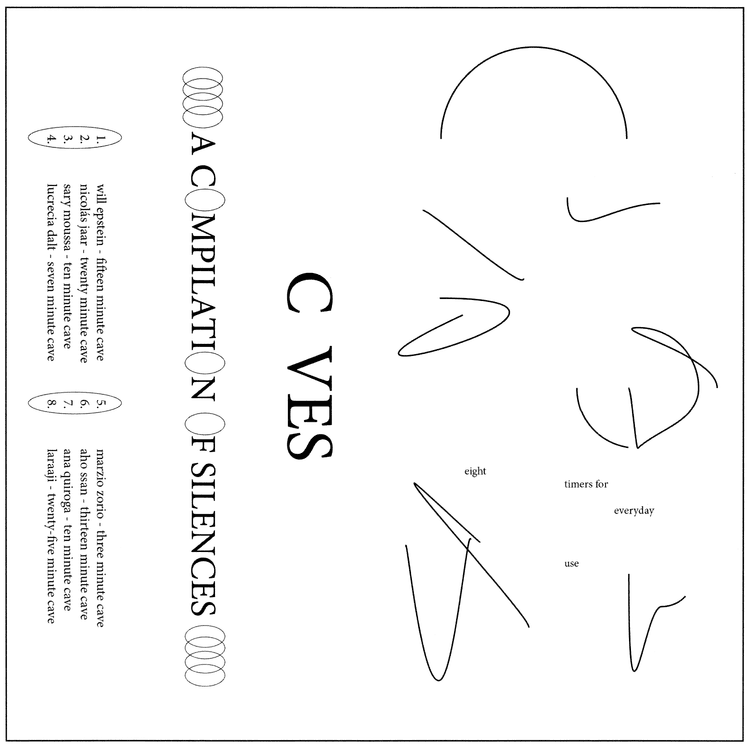 | Caves is a compilation by Other People made up of eight timers for everyday use. Artist were asked to make "caves" for a length of silence of their choosing. This collection of silences and music can be used as timers for cooking, meditation, running, walking, sleeping or anything you want ♡ Features Laraaji, Lucrecia Dalt, Ana Quiroga, Sary Moussa, Will Epstein, Aho Ssan, Nicolás Jaar and Marzio Zorio. All proceeds will go to the Dongyu Gatsal Ling Nunnery. (Today more than 100 nuns live, study, and practice at Dongyu Gatsal Ling. The maintenance of the Nunnery and the nuns’ daily expenses are funded entirely by voluntary contributions from people throughout the world. More info here: dgli.org/dgli/the-dgl-endowment/)
| ||||||||||||||||||||||||||||||||||||||||||||||||||||||||||||||||||||||||||||||||||||||||||||||||||||||||||||||||||||||||||||||||||||||||||||||||||||||||||||||||||
Jul 2020 OP054 | TelasNicolás Jaar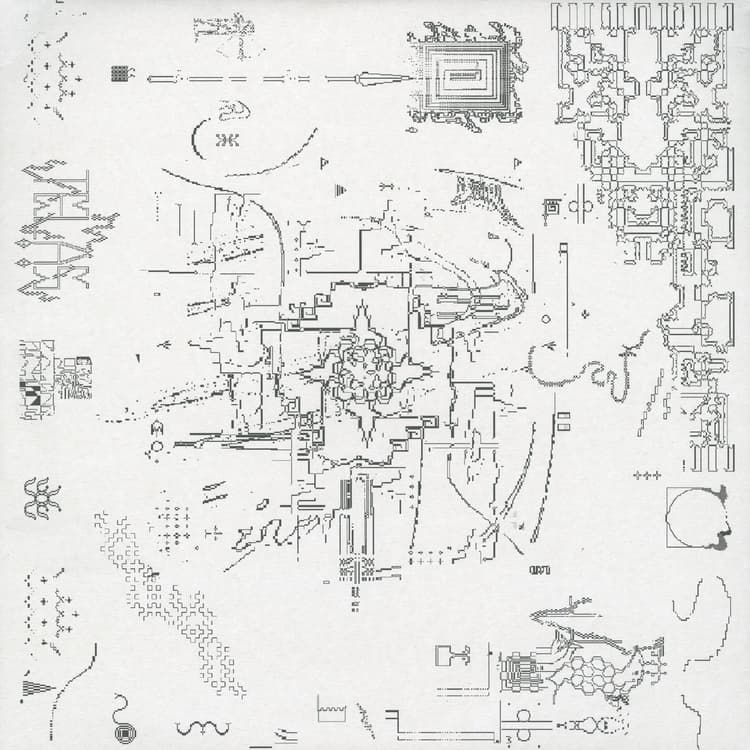 |
| ||||||||||||||||||||||||||||||||||||||||||||||||||||||||||||||||||||||||||||||||||||||||||||||||||||||||||||||||||||||||||||||||||||||||||||||||||||||||||||||||||
Mar 2020 OP052 | ImbalanceSary Moussa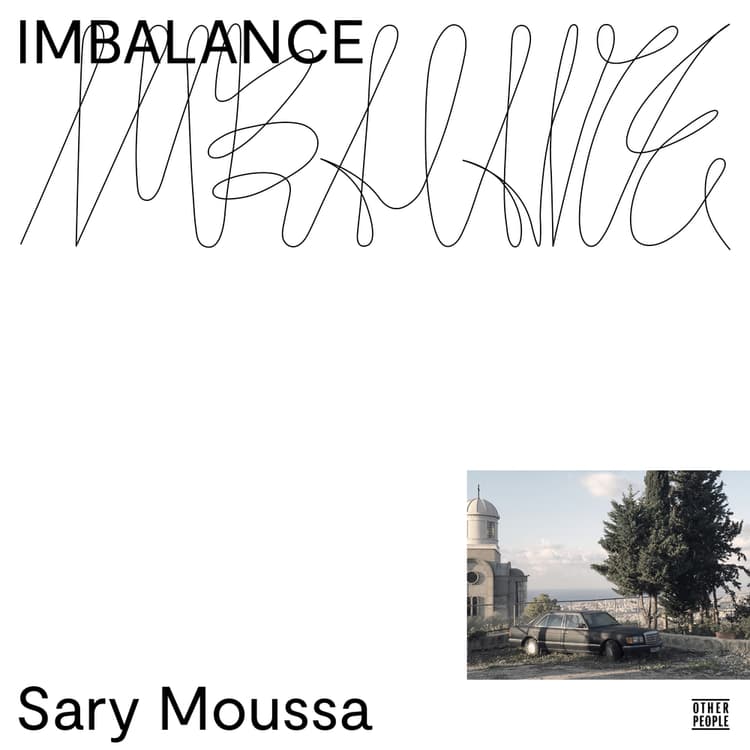 | Sary Moussa is an electronic musician who has been active in the Beirut underground scene since 2008. He released his first full-length album Issrar in October of 2014 under the moniker radiokvm. His latest record Imbalance, finds Moussa revisiting the soundscapes of his childhood; from the echoes of political unrest, to Greek-Catholic chants, and the quiet nights of a secluded Southern village. The album combines sound design with intricate melodic arrangements to create a choir of synthesizers and noise singing in and out of sync. In addition to his solo work, Moussa has also composed music for theatre and dance performances, short films, and museum installations.
| ||||||||||||||||||||||||||||||||||||||||||||||||||||||||||||||||||||||||||||||||||||||||||||||||||||||||||||||||||||||||||||||||||||||||||||||||||||||||||||||||||
Sep 2019 OP051 | Bandiera Di CartaTomaga, Pierre Bastien | 'Bandiera Di Carta’, represents the ongoing collaboration between instrument builder and composer Pierre Bastien and the London based experimental duo Tomaga (Valentina Magaletti and Tom Relleen). Bastien has been called a “mad musical scientist with a celebrity following” by The Guardian (UK) having collaborated with the likes of filmmaker Pierrick Sorin, fashion designer Issey Miyake, singer and composer Robert Wyatt as well as Aphex Twin, who released three of his albums on his label Rephlex. Tomaga have made more than a dozen records since forming in 2014, pursuing a path of fearless experimentation and sonic brinksmanship that has won them fans and plaudits from far and wide, including Thurston Moore, with whom they collaborated on the CAN Project with Malcolm Mooney, Deb Goodge and others in 2017, as well as Wire, Silver Apples and Stereolab, with whom they toured extensively in summer 2019. The artistic collaboration between Pierre and Tomaga began with two commissions: from Fructose Festival in Dunkirk and the revered underground festival Supersonic in Birmingham UK. Recording initially at a studio in the industrial port of Dunkirk, the uneasy bond between borders and states seems to have been a theoretical motor to the collaborative sessions, as well as the bleak landscape of the sea port frontier. This inspiration found further manifestation in the cover image for ‘Bandiera Di Carta’. Resembling a white paper flag, it is in fact a photograph of Bastien’s paper and air sound machine installed on stage at Teatro Carignano in Turin as part of the trio’s performance there. This charged, ambivalent image of a blank flag evokes the transcendence of the national, a prescient visual motif that meditates on the contemporary uncertainty around notions of national identity and borders but perhaps also a ‘carte blanche’ for the artists involved, in which they can deviate from the confines of their usual practice into new and strange territories. For each piece Bastien’s unique sonic style: by turns his kinetic mecanoid motors, capriciously arrhythmic pipes, or the peculiar sussurus of paper, creates a world in which Tomaga introduce their musical pallete. Magaletti’s percussion anchors these sometimes chaotic forces into beguiling syncopations, with Relleen’s synthesizer and organ work creating harmonic counterpoints and interruptive provocations, to which Bastien responds with lyrical turns on prepared trumpet, rubber band, tin foil and bass ocarina. The results are curiously evocative of free jazz by the likes of Sun Ra or Art Ensemble of Chicago paired with the percussive sound worlds of artists like Francis Bebey or Muslimgauze along with unique and sometimes bizarrely exotic tonal landscapes of composers like Catherine Christer Hennix, Carl Stone, or Egisto Macchi. All three musicians seem to find space to bloom in ways that are markedly different from their individual work and the resulting album is a strikingly original and powerfully bold affirmation of what can happen when venturing beyond the normal in pursuit of the other.
| ||||||||||||||||||||||||||||||||||||||||||||||||||||||||||||||||||||||||||||||||||||||||||||||||||||||||||||||||||||||||||||||||||||||||||||||||||||||||||||||||||
May 2018 OP049 | DossierPatrick Higgins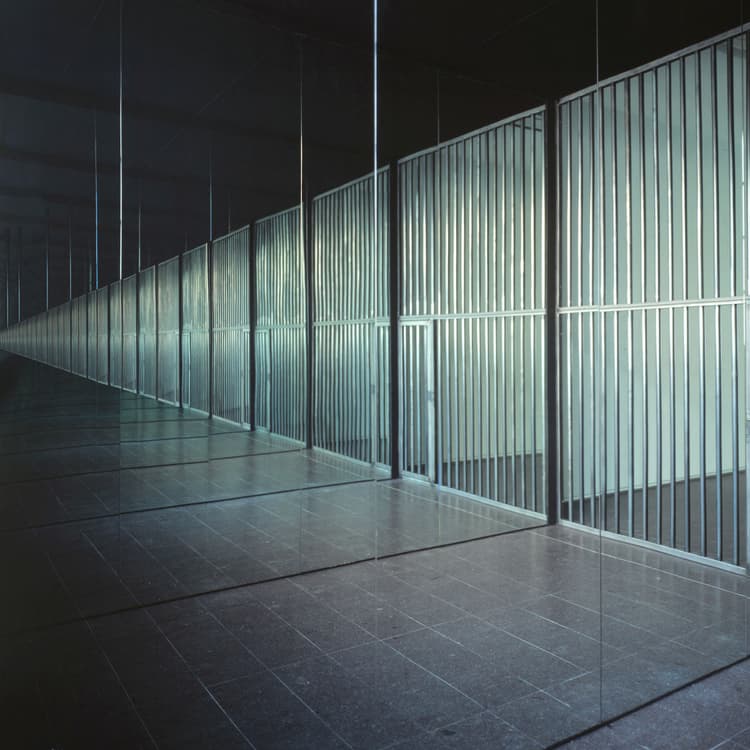 | Other People is proud to present a new solo record of guitar and live custom electronics from artist Patrick Higgins, an American avant-garde composer and producer from New York City. Higgins is known for his work in experimental and contemporary classical music, playing guitar and composing in the ensemble Zs, which is said to be one of the strongest innovative bands in New York. His work as a composer traverses the styles of the European avant-garde styles with the post-minimalist sounds of New York. His upcoming release on Other People, “Dossier,” is a new solo record of guitar and live custom electronics, all original programming and live sampling using midi triggers mapped to the guitar, a four movement work of dark intense material all performed live without overdubs or edits, this material was developed over a two-year and premiered during a European concert tour across 10 countries in Nov 2016. The record is both an engagement with contemporary electronic music and yet is entirely performed — transforming the guitar at once into an instrument and a controller, where the performer is swallowed by processes that result from the playing and at the same time envelop it. All of the samples and synthetic patches were custom built and specifically engaged to become elements of live guitar manipulation. The sound world is post-apocalyptic in style but builds to a very intimate and introspective emotional finish. It is a consummate and highly unique aesthetic statement, engaging with the alienation and inner emotional economy of contemporary digital life, its politics, erotics, and violence. The work is also, in this respect, a meditation on the social space of the individual in the increasingly digital, alienated world. An attempt at a poetics at home with the violence and delicate, fleeting emotion of the times. Cover art is by Alfredo Jaar.
| ||||||||||||||||||||||||||||||||||||||||||||||||||||||||||||||||||||||||||||||||||||||||||||||||||||||||||||||||||||||||||||||||||||||||||||||||||||||||||||||||||
Apr 2016 OP038 | Become AliveDave Harrington Group | For Become Alive, Harrington was inspired by the classic jazz albums of the late 60s and early 70s, which experimented with contemporary studio recording techniques and effects. He assembled about a dozen players and recorded days of improvised material, later manipulating it into something that, while fundamentally live, takes full advantage of Harrington’s penchant for electronic manipulations of organic sound - the same conceptual approach he takes with his heavily effected and live-sampling guitar work, applied to an entire group. Each track is the unique product of Harrington’s unorthodox musical make-up – jazz training and ability, a collaborative, free-minded spirit, and a personal vision of mixing and post-production techniques to tie it together. “This record is the result of improvising with different combinations of people, and then processing and re-sculpting those improvisations - isolating passages, turning them into something new, overdubbing layers of myself, maybe taking something from another piece and superimposing it out of its original context. But each track is always me interacting with other people, sometimes just one or two… sometimes ten. There was flute, vibes, organ, fender rhodes, guitar, bass, two drummers, percussion, sax… just full-on, over-blown energy. I took all that and treated it as raw material in the mixing stage… But when you have ten people in a room, you can only edit so much. Everything is in every microphone anyway – it’s all connected, so it’s about turning it into whatever it wants to be.” “It’s all just about making improvisational music in a way that is personal and true,” offers Harrington when asked about his specific influences. “Derek Bailey is one name I will mention, though, because he has very little to do with what I do stylistically. He really wrote the book on free improvisation guitar playing - it was not jazz, not swing and not rock, it was just pure personality. Nobody else could do it. That’s something I hear in the records that most inspire me – when you don’t hear something and think, oh, well that’s this thing, when you just hear the ideas coming straight at you.” Much of the initial mixing and editing of the album was done during the height of Darkside touring, “Nico and I were improvising together on stage basically every night,” Harrington says, “it was a very focused period of time. Ultimately, this album is very personal. This is my first LP with my name on it. It’s me and a dozen of my favorite musicians and closest friends. That was the spirit of making this record… Bringing people together and playing, improvising, being present.”
| ||||||||||||||||||||||||||||||||||||||||||||||||||||||||||||||||||||||||||||||||||||||||||||||||||||||||||||||||||||||||||||||||||||||||||||||||||||||||||||||||||
Nov 2015 OP035 | Live 1977-1979Teenage Jesus and the Jerks | Teenage Jesus and the Jerks began to formulate their visionary brand of aural catharsis sometime during the first half of 1977, amidst the sordid ruins of a then fully down-and-out Lower Manhattan. The mastermind behind this juggernaut of sonic libertinage was a barely pubescent but world-weary runaway who called herself Lydia Lunch. Influenced strongly by the Marquis de Sade and Henry Miller, Lunch shrewdly decided to graft the existential horror of her own writing onto harsh, atonal music after being exposed to the room-clearing live output of other contemporary rock-music deconstructionists like Suicide and Mars. With an agenda of conjuring nightmarish intensity in lieu of technical instrumental ability, Teenage Jesus instantly made the supposedly “nihilistic” and “raw” current wave of so-called Punk acts sound like slick, good-timey pop music by comparison. Teenage Jesus and the Jerks were The Texas Chainsaw Massacre, lisa, She Wolf of the SS, and Salò, or the 120 Days of Sodom, transliterated into a blatant mockery of the increasingly tired, basic rock-band format. Posthumously, there have been numerous reissues of the primary Teenage Jesus corpus, namely the first side of the Lydia Lunch double compilation album Hysterie (CD Presents, 1986), a very incomplete anthology titled Everything (Atavistic, 1995) and Shut Up and Bleed (Cherry Red/Atavistic, 2008), which also featured Beirut Slump tracks. These less-than-fastidious documents contained reverb-laden transcriptions of the studio cuts directly from vinyl copies, as well as random live tracks of mediocre fidelity. This particular collection about to be released on Other-People is meticulously edited and mastered from rare bootlegs taped during the initial 1977-1979 period of classic band, and only one title (Crown of Thorns from January 17,1979) has been legitimately released to date, albeit in a completely different sound quality. Almost every known Teenage Jesus and the Jerks composition appears on this compendium and Ms. Lunch herself is quite satisfied that this just might be the final nail in the coffin…. If it is the sound of deliberately organized and deployed agony you are seeking, your bath has been drawn and the razor awaits. Weasel Walter, Brooklyn, NY, June 30, 2015
| ||||||||||||||||||||||||||||||||||||||||||||||||||||||||||||||||||||||||||||||||||||||||||||||||||||||||||||||||||||||||||||||||||||||||||||||||||||||||||||||||||
Nov 2015 OP029 | Turkson SideOkokon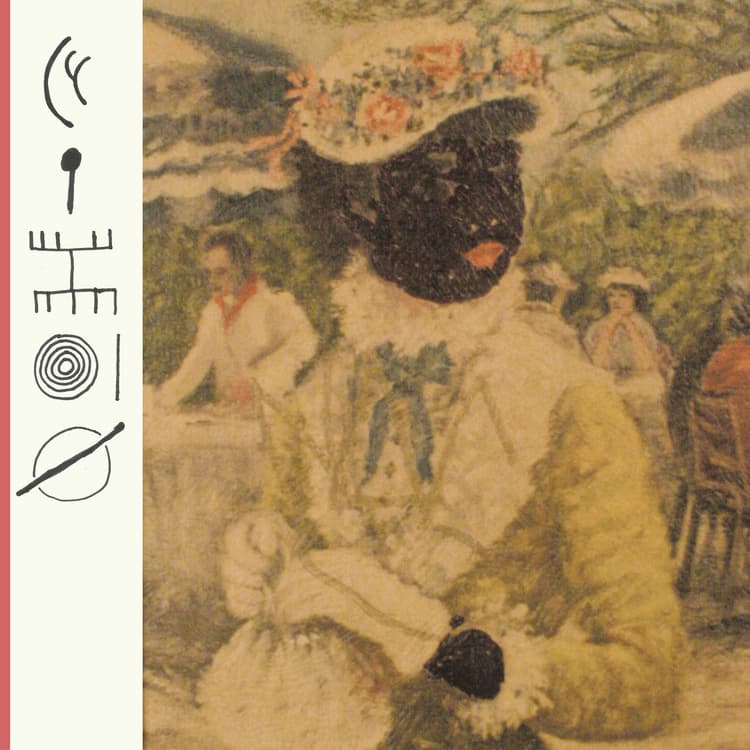 | Just waking up and everything sounding slower. Holes in the wall. The unknown in the familiar. The shock of the new. Just-turned rubble. Thick clouds of recall. Muted high-life, de-centered hip-hop, and disparate conversation. Heavy, sinking jazz and dissected infomercials. Too much chewing gum? Not quite anything, or half of something. Reminds me of. Smells like...? Turkson Side is Africanus Okokon’s first album. It is almost entirely sample-based, made largely within a simple, custom-made playback software with each track recorded in one take with very little editing. “Wrake” is the only exception, a recording of him playing an Ethopian krar inside his house. Africanus is no stranger to the label. Primarily a visual artist with background in video, animation, and collage, he’s designed most of Other People’s recent site graphics and a number of release covers. In part, this album as Okokon is a translation of a developed aesthetic to an unfamiliar medium.Like his collage and animation work , it’s rough-hewn yet deliberate, consciously inclusive of digital processing and sampling artifacts for their unique texture and visceral affect. Throw the means aside, though, and what you’ve got is an evocative collection of craggy, trance-inducing concréte-poetry that act equally well as soundscapes for late-night or early-morning. “Asphalt” starts things, a near-fifteen-minute “multi-movement” (if you will) piece that moves through zones of blasted commercial intro FX, alien telecast High-Life, gibberish spoken word, and xylophonic skeleton dance march music, lingering at every interstice. Shorter, more singular pieces follow, each swathing and detailing a particular rhythmic structure with choice loops: the detritus of film soundtracks, warped conversation, gain-pumped jazz-shuffles, and old, mystic drum tapes that glitch and squeeze through the software’s un-sanded synapses. Higher volumes are recommended to bring out the record’s finer imperfections.
| ||||||||||||||||||||||||||||||||||||||||||||||||||||||||||||||||||||||||||||||||||||||||||||||||||||||||||||||||||||||||||||||||||||||||||||||||||||||||||||||||||
Jul 2015 OP028 | TerepaTerepa | In alphabetical order, Terepa is no less than: Rashad Becker, Charlotte Collin, Lucrecia Dalt, Laurel Halo, Julia Holter, Kohei Matsunaga, and Grégoire Simon. Following a method conceived by Kohei Matsunaga (aka NHK’Koyxen) years ago out of a desire to collaborate with people living distantly, the seven artists recorded two sessions in disparate locations across Los Angeles, Berlin, Osaka, and Paris, the only creative parameter being that they all begin recording simultaneously for a twenty-minute period and that they use no means of communication or monitoring outside of their own telepathic capacities. The recordings were later gathered, layered, and mixed, resulting in two lucid, essentially chance-based compositions that Other People is thrilled to present pressed to two sides of white vinyl. The septet repeated the process for a drawing session, the result of which is printed directly onto the surface of record. Side-one begins with murky piano, soft-plucked strings, delicate, high-pitched drone, and the sound of distant brass, all working in remarkable counterpoint. The whole slow-cooks and smears over fifteen-minutes, with recognizable timbres melting away and pooling into a milieu of pitched face-relations. Side-two is lighter, aerated by faint voice, subby purr, dull chimes, and bulbous trombone accents. While one artist’s signature may simmer to the top for a moment, the gravitas lays in how all seven voices fold together, warping into a swampy, mist-brushed ecosystem that, value of parts given, is more than the sum.
| ||||||||||||||||||||||||||||||||||||||||||||||||||||||||||||||||||||||||||||||||||||||||||||||||||||||||||||||||||||||||||||||||||||||||||||||||||||||||||||||||||
Jun 2015 OP031 | PomegranatesNicolás Jaar | Longer and slower-releasing than his other albums, Pomegranates often parallels the cinematic epic on which it’s based (Նռան գույնը), with ideas pursued over long timelines and across dark landscapes, assembling elements and moods from the aesthetic and folkloric landscapes of Armenia. Jaar’s identity is perceived within this, folding in his heritage as Palestinian and Chilean as he attempts to build a musical architecture outwards that frames as much of the mess and sprawl of life as possible; using a language that investigates the movement and fluctuation of his own artistic career and character similarly to the film’s tracing of the coming of age of the young poet, Sayat-Nova. At times, Pomegranates feels profoundly intimate, as though looking through the archive of a friend’s music and discovering the accent and common currency that lives within each of these tracks. Much of Jaar’s most elegant and touching melodic work is nestled here, its power residing in its simplicity and willingness to speak to the heart and not the mind of the listener. In the text document included in the first freely distributed version of the album in 2015, Jaar writes that the album was conceived during a moment of change, and that the pomegranate became an icon that heralded that passage of time. The physical publication of Pomegranates closes one door whilst opening another, keeping promises and marking a significant point in the career of an artist who restlessly reinvents himself, with a document that illustrates a common language of lyricism, freedom, and emotional resonance linking his many paths and projects.
| ||||||||||||||||||||||||||||||||||||||||||||||||||||||||||||||||||||||||||||||||||||||||||||||||||||||||||||||||||||||||||||||||||||||||||||||||||||||||||||||||||
May 2015 OP027 | Conspiracy of WomenLydia Lunch, Nicolás Jaar, Weasel Walter |
| ||||||||||||||||||||||||||||||||||||||||||||||||||||||||||||||||||||||||||||||||||||||||||||||||||||||||||||||||||||||||||||||||||||||||||||||||||||||||||||||||||
Oct 2014 OP014 | Lucrecia DaltLucrecia Dalt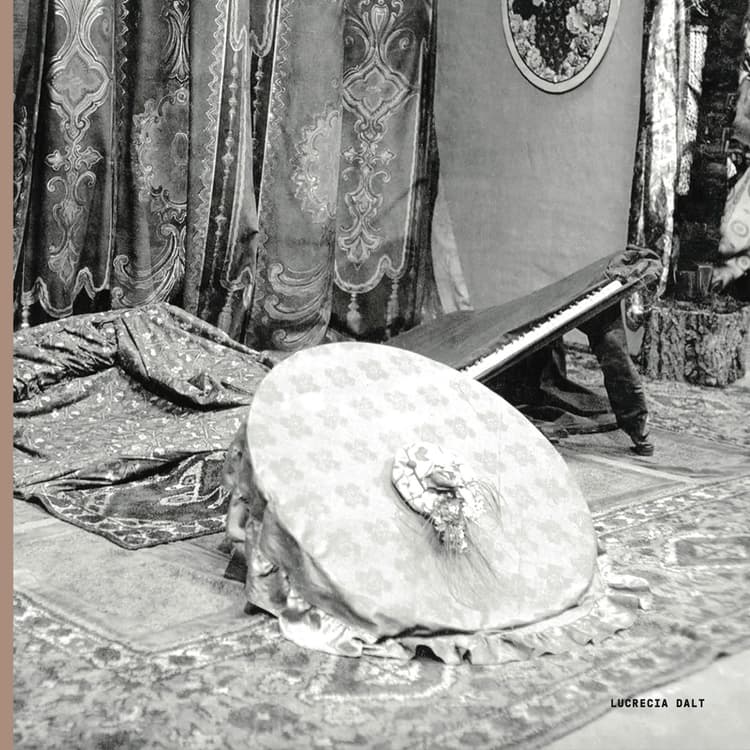 |
| ||||||||||||||||||||||||||||||||||||||||||||||||||||||||||||||||||||||||||||||||||||||||||||||||||||||||||||||||||||||||||||||||||||||||||||||||||||||||||||||||||
Jan 2014 OP004 | DubnaVtgnike |
| ||||||||||||||||||||||||||||||||||||||||||||||||||||||||||||||||||||||||||||||||||||||||||||||||||||||||||||||||||||||||||||||||||||||||||||||||||||||||||||||||||
Oct 2013 OP002 | The Beautiful MoonHigh Water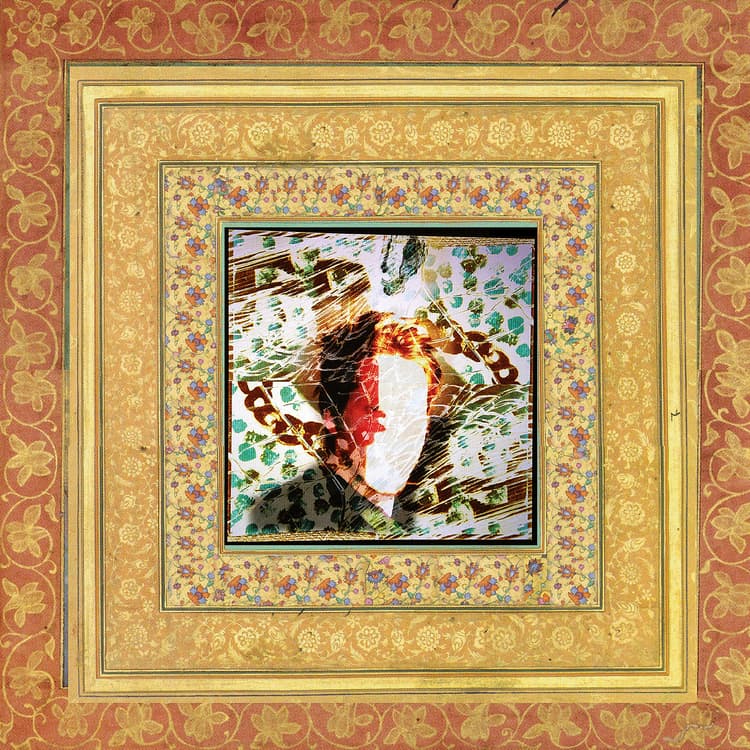 |
| ||||||||||||||||||||||||||||||||||||||||||||||||||||||||||||||||||||||||||||||||||||||||||||||||||||||||||||||||||||||||||||||||||||||||||||||||||||||||||||||||||
OP000 | Network MixNicolás Jaar |
|